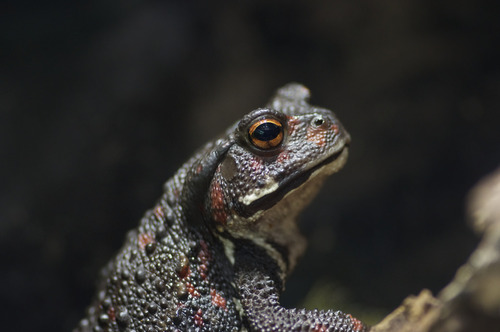
Eastern-Japanese Common Toad
Bufo formosus
A stoic guardian of Japanese gardens, the Eastern-Japanese Common Toad is a master of camouflage and a nocturnal pest-control expert. Known for its slow, deliberate walk and impressive size, it is one of the most iconic amphibians of the Honshu landscape.
Quick Identification
Size
7–18 cm (2.8–7 inches) in length; typically weighs 150–400 grams
Colors
Variable shades of muddy brown, olive-green, or reddish-brown with dark, irregular blotches; cream-colored underside often speckled with black
Key Features
- Large, prominent parotoid glands behind the eyes
- Dry, warty skin with dark, irregular blotches
- Stocky build, reaching up to 7 inches in length
- Slow, deliberate crawling gait rather than jumping
When You’ll See Them
Geographic range
Where Does the Eastern-Japanese Common Toad Live?
Native to the island of Honshu in Japan, the Eastern-Japanese Common Toad is most prevalent across the Kanto and Tohoku regions. While its ancestral home lies in the temperate forests of central and northern Japan, it has successfully established introduced populations on the northern island of Hokkaido. This toad is a common sight across a diverse range of landscapes, from sea-level coastal plains to high-altitude mountain forests.
Basemap © OpenStreetMap contributors
Behavior
The Eastern-Japanese Common Toad is a stoic, terrestrial amphibian that spends much of its life on the forest floor or tucked away in garden leaf litter. Primarily nocturnal, these toads emerge at dusk to hunt, moving with a slow, deliberate crawl rather than the energetic hopping common to many frogs. They are quintessential ambush predators, relying on their excellent camouflage to remain undetected by both unsuspecting insects and potential predators.
During the breeding season in early spring, they undergo a dramatic shift in behavior, migrating in large numbers to ponds or slow-moving water. This is when the males produce their rhythmic, low-pitched calls. Despite their toxic skin secretions—stored in the parotoid glands to deter predators—they are docile creatures that have adapted remarkably well to human presence, often taking up semi-permanent residence under porches, stone steps, or in damp crawl spaces.
EverydayEarth exclusive
Camera Tips
To capture high-quality footage of the Eastern-Japanese Common Toad, placement is everything. These toads are strictly ground-dwellers, so you must mount your camera just a few inches off the ground. Aiming the lens slightly downward at a 10-15 degree angle ensures you catch the top of the head and the distinctive parotoid glands. If you are using an AI-powered camera, positioning it near a porch light or a low-intensity garden lamp can provide enough ambient light for color video, though high-quality infrared (IR) night vision is essential for their peak midnight activity.
Strategic attractants for toads don't involve food, but rather environmental needs. Toads are heavily drawn to moisture and insects. Placing a shallow water dish or a 'toad house' made from a cracked ceramic pot in front of the camera is highly effective. Alternatively, place the camera near a garden feature that naturally attracts beetles and slugs, such as a mulch pile or a damp rock garden. During the early spring breeding migration (March-April), setting cameras near the edges of garden ponds will capture the most dramatic movement and social interaction.
Because toads move relatively slowly, you do not need an ultra-fast trigger speed, but you should ensure the 'recovery time' between captures is short. This allows the camera to record the toad's entire transit across the frame. Set your video length to 15-20 seconds to witness their unique 'walking' gait, which is more common than hopping in this species. In suburban settings, check areas where concrete meets soil, as toads often use these edges as highways for their nightly foraging.
Similar Species
Species that look similar or are commonly confused with Eastern-Japanese Common Toad.
Frequently Asked Questions
Record Eastern-Japanese Common Toad at your habitat
Connect a camera to start building your own species record — AI identifies every visitor automatically.