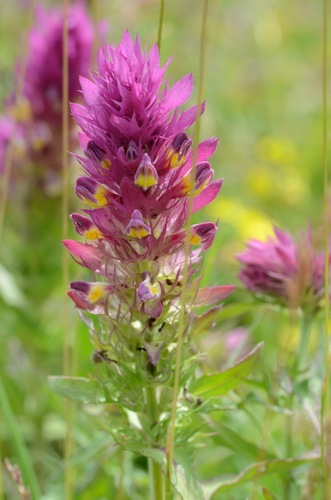
Field Cow-wheat
Melampyrum arvense
A rare gem of the meadow, the Field Cow-wheat dazzles with its vibrant purple plumes and complex parasitic lifestyle. It is a master of survival that relies on the secret help of ants and the roots of neighboring grasses.
Quick Identification
Size
Height ranges from 10–60 cm (4–24 inches); spread typically 15–30 cm (6–12 inches)
Colors
Conspicuous rose-pink to deep purple terminal bracts; flowers are tubular and yellow with pinkish lips
Key Features
- Dense, colorful spike of pink-purple bracts at the top
- Tubular yellow flowers hidden within the bracts
- Opposite, lance-shaped green leaves
- Upright, often branched hairy stems
When You’ll See Them
Behavior
Field Cow-wheat is a fascinating hemiparasitic plant, meaning that while it has green leaves for photosynthesis, it also survives by 'stealing' nutrients. It uses specialized root structures called haustoria to attach itself to the roots of neighboring grasses and herbs, drawing out water and minerals. This strategy allows it to flourish in competitive meadow environments where soil nutrients might be limited.
The plant has evolved a clever partnership with local ant populations for seed dispersal. Its seeds possess a fleshy, oil-rich attachment called an elaiosome. Ants find these seeds irresistible and carry them back to their underground nests to feed the colony. Once the oil is consumed, the unharmed seed is discarded in the ant's 'refuse pile,' which serves as a nutrient-rich, protected nursery for the young plant to germinate the following spring.
EverydayEarth exclusive
Camera Tips
Documenting Field Cow-wheat requires a shift from traditional wildlife photography to a macro-focused trail camera setup. Because this plant stays low to the ground, you should mount your camera on a stake or low tripod just 10 to 15 inches above the soil. Position the lens at a slight upward angle to emphasize the towering effect of the purple floral spikes against the background. This perspective captures the intricate details of the bracts and the small tubular flowers tucked inside.
To capture the plant’s ecological interactions, set your camera to high-sensitivity motion detection or high-speed video. Field Cow-wheat is a magnet for heavy-bodied pollinators like bumblebees. By focusing on the mid-section of the flower spike, you can record the 'buzz pollination' technique bees use to release pollen. If you are interested in its relationship with ants, try a ground-level 'macro' setup near the base of the plant during late August when the seeds are dropping; you might catch the rare sight of ants transporting seeds to their colony.
Lighting is the most critical factor for this species due to its vibrant pink and purple hues. Direct midday sun can wash out the colors, so aim for cameras with good dynamic range or place your setup in a spot that receives dappled sunlight. The 'golden hour'—the hour after sunrise or before sunset—will make the translucent bracts appear to glow, providing professional-grade footage. If your camera supports time-lapse, set a trigger for every 60 minutes over a week in early June to watch the rapid expansion and coloration of the terminal spike.
Similar Species
Species that look similar or are commonly confused with Field Cow-wheat.
Frequently Asked Questions
Record Field Cow-wheat at your habitat
Connect a camera to start building your own species record — AI identifies every visitor automatically.