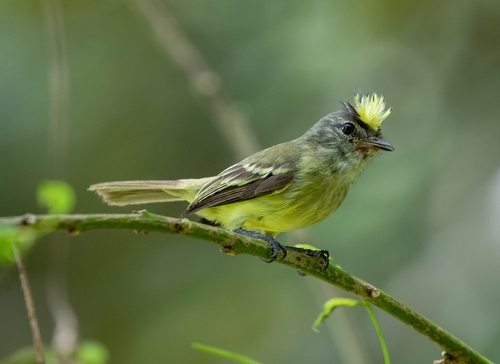
Forest Elaenia
Myiopagis gaimardii
A tiny, energetic architect of the tropical canopy, the Forest Elaenia is a master of camouflage. With its subtle olive plumage and cheerful whistles, it brings the vibrant spirit of the Neotropical woodlands to life.
Quick Identification
Size
12–13 cm (4.7–5.1 in) in length; 12–15 grams (0.4–0.5 oz)
Colors
Olive-green upperparts, pale yellow belly and vent, grayish-white throat, two distinct white wing bars
Key Features
- Two distinct white or pale yellow wing bars
- Concealed white or yellow crown patch often hidden by crest
- Small, dark bill with a slightly hooked tip
- Pale yellow belly fading into a grayish throat
When You’ll See Them
Geographic range
Where Does the Forest Elaenia Live?
This charming flycatcher is native to the lush tropical regions of Central and South America. Its range begins in Panama and extends through the humid lowlands of Colombia, Venezuela, and the Guianas, reaching as far south as Bolivia and central Brazil. It is also a common resident on the island of Trinidad. Within this vast territory, it thrives in environments where forest canopy meets open spaces, often avoiding the deepest, darkest interiors of primary rainforest in favor of more luminous edges and clearings.
Basemap © OpenStreetMap contributors
Behavior
While they are often seen alone or in pairs, they frequently join mixed-species foraging flocks, traveling with other small tanagers and warblers through the treetops. They are not particularly shy but can be difficult to spot because they blend in so well with the dappled sunlight and foliage of the forest canopy. They communicate with a series of high-pitched whistles and trills that are often the first sign of their presence in a garden or woodlot.
EverydayEarth exclusive
Camera Tips
Water is another excellent draw for this species. A high-elevation birdbath or a misting system installed near the tree canopy can entice them to descend from the higher branches for a drink or a bath. Because they are small and fast-moving, use a camera with a high trigger speed and set it to take bursts of photos or short high-definition videos. This increases your chances of capturing the moment they flare their crest or reveal their distinctive wing bars.
Lighting is crucial for this species. Because they often live in 'dappled' light environments, set your camera to a higher ISO or use a fast shutter speed to prevent motion blur. The best time for activity is early morning when the sun first hits the upper leaves, as this is when insects are most active and the birds are most vocal. Avoid placing the camera where it will be facing directly into the rising sun to prevent lens flare from ruining your shots.
Similar Species
Species that look similar or are commonly confused with Forest Elaenia.
Yellow-bellied Elaenia
Larger with a bushier crest, more extensive yellow on the belly, and a distinctive buzzy call.
Greenish Elaenia
Very similar in appearance but lacks the white crown patch and has a distinctly different, more melodic song.
Small-billed Elaenia
Features three wing bars instead of two and is primarily a migratory species in many parts of its range.
Frequently Asked Questions
Record Forest Elaenia at your habitat
Connect a camera to start building your own species record — AI identifies every visitor automatically.