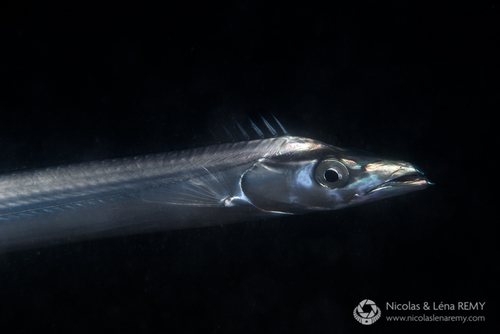
Frostfish
Lepidopus caudatus
The Frostfish is a shimmering phantom of the deep, known for its mirror-like skin and mysterious winter appearances on coastal shores. A master of the midnight ambush, this ribbon-like predator is one of the ocean's most striking vertical hunters.
Quick Identification
Size
Length: 1.2–2.1 m (4–7 ft); Weight: 3–8 kg (6.6–17.6 lbs)
Colors
Brilliant mirror-like metallic silver; lacks scales; dorsal fin is often grey or black-edged
Key Features
- Extremely elongated, ribbon-like body shape
- Large mouth with prominent, sharp needle-like teeth
- Small but distinct forked tail fin
- Scaleless, highly reflective skin that rubs off easily
When You’ll See Them
Geographic range
Where Does the Frostfish Live?
The Frostfish is a widespread marine species native to the temperate oceans of both the Northern and Southern Hemispheres. It is commonly found throughout the Mediterranean Sea and the eastern Atlantic from France to South Africa, as well as across the Indo-Pacific region around Australia and New Zealand. While they are primarily deep-sea inhabitants, they are most frequently encountered by people in coastal regions during the winter months when they move closer to shore.
Basemap © OpenStreetMap contributors
Behavior
In their natural habitat, they often hover in a vertical position with their heads pointed toward the surface, waiting to ambush prey from below. They use their long, continuous dorsal fin to undulate through the water, a movement that allows for precise, stealthy positioning despite their lack of a powerful tail. While they are usually solitary, they can be found in high concentrations where food sources like hake or sardine schools are abundant.
EverydayEarth exclusive
Camera Tips
Baiting is almost essential for attracting this deep-water predator into your camera’s frame. Use a mesh 'chum bag' filled with oily fish like crushed sardines, mackerel, or squid. Secure the bag firmly to a stationary object near the camera lens; the scent trail will draw them in from the surrounding darkness. Frostfish are attracted to movement, so placing the bait in an area with a slight current will help disperse the scent and create the visual 'flicker' of prey that triggers their hunting instinct.
Timing is critical for this species. Aim for the coldest nights of the year during high tide, particularly when there is little to no wind. In places like New Zealand or Southern Australia, the 'frosty' nights of mid-winter are peak times for these fish to venture into shallower, accessible waters. Ensure your camera is set to record long video clips (30-60 seconds) rather than still photos, as their undulating swimming motion and reflective skin are much easier to identify in motion.
Lastly, be mindful of the 'snow' or backscatter often found in seawater. Position your lights or IR sensors slightly to the side of the lens rather than directly behind it. This reduces the reflection off small particles in the water, ensuring that the brilliant, mirror-like silver of the Frostfish remains the clear focus of your footage.
Similar Species
Species that look similar or are commonly confused with Frostfish.
Frequently Asked Questions
Record Frostfish at your habitat
Connect a camera to start building your own species record — AI identifies every visitor automatically.