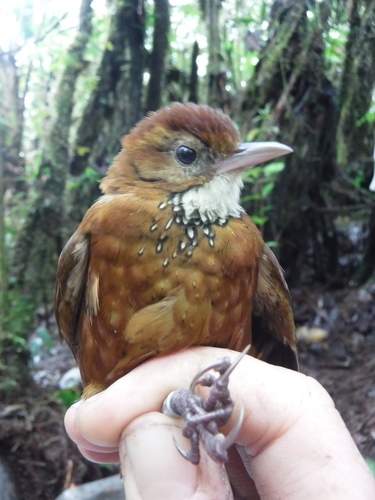
Fulvous-dotted Treerunner
Margarornis stellatus
A master of the vertical climb, the Fulvous-dotted Treerunner shimmers in the misty Andean cloud forests with its unique pearly-spotted plumage.
Quick Identification
Size
Length: 14 cm (5.5 in); Weight: 18–22 g (0.6–0.8 oz)
Colors
Rich rufous-brown upperparts and a cinnamon tail; underparts are fulvous (tawny) with distinct teardrop-shaped white spots outlined in black.
Key Features
- Stiff, spiny tail used for vertical climbing
- Distinctive pearly-white teardrop spots on breast and belly
- Rich rufous-brown back with a prominent buff eyebrow stripe
- Small, active bird often seen hitching up mossy tree trunks
When You’ll See Them
Geographic range
Where Does the Fulvous-dotted Treerunner Live?
This species is a resident of the humid Andean slopes in South America. Its native range is restricted to the Chocó biogeographic region, stretching from the western Andes of Colombia south into western Ecuador. It is a habitat specialist, found only in high-moisture forests where epiphytic growth is most prolific.
Basemap © OpenStreetMap contributors
Behavior
The Fulvous-dotted Treerunner is a specialized and energetic climber, acting much like a New World version of a treecreeper. It moves with quick, jerky hops along the vertical trunks and large horizontal limbs of moss-covered trees. By using its specialized, stiffened tail feathers as a support prop, it can navigate the complex architecture of cloud forest epiphytes with ease, probing deep into moss and bromeliads for hidden prey.
While they are sometimes seen in pairs, these treerunners are most frequently encountered as integral members of mixed-species foraging flocks. They are restless hunters, rarely staying in one spot for more than a few seconds before fluttering to a nearby tree to begin a new ascent. They generally avoid open spaces, preferring the dense, humid interior of primary forest where they can remain under the cover of the canopy.
EverydayEarth exclusive
Camera Tips
To capture the Fulvous-dotted Treerunner, camera placement is everything. These birds are vertical specialists, so you should avoid placing cameras on the ground. Instead, strap your camera to the trunk of a large, epiphyte-laden tree about 1.5 to 2 meters off the ground. Look for trees that are part of a 'flock route'—areas where you consistently hear mixed-species bird calls. Aim the lens at a section of the trunk that has particularly thick moss or a large bromeliad, as these are the bird's primary foraging targets.
Since the cloud forest environment is notoriously dark and misty, use a camera with high light sensitivity and a very fast trigger speed. These birds move quickly and sporadically; a slow trigger will result in a tail-only shot or a blurry rufous streak. If your camera supports it, use a 'Burst Mode' or high-frame-rate video to catch the moment they use their stiff tail to prop themselves against the bark.
You won't have much luck with traditional seed or suet feeders, as this treerunner ignores them. However, maintaining a garden with native, moss-friendly trees and high humidity can encourage them to visit the forest edge. If you are setting up a trail cam in the wild, look for 'hotspots' near small mountain streams where the humidity is highest, as these areas support the densest invertebrate populations that the treerunners rely on.
Similar Species
Species that look similar or are commonly confused with Fulvous-dotted Treerunner.
Frequently Asked Questions
Record Fulvous-dotted Treerunner at your habitat
Connect a camera to start building your own species record — AI identifies every visitor automatically.