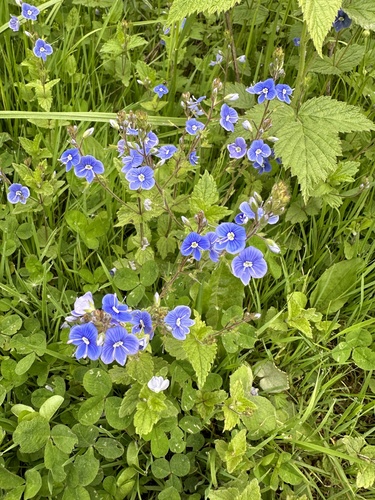
Germander Speedwell
Veronica chamaedrys
A splash of sapphire in the springtime grass, the Germander Speedwell is famous for its bright blue 'bird's-eye' flowers. This resilient wildflower is a favorite for pollinators and a sign that spring has truly arrived.
Quick Identification
Size
Height: 10–30 cm (4–12 inches); Flower diameter: 8–12 mm (0.3–0.5 inches)
Colors
Bright azure-blue petals with dark blue nectar guides and a distinct white center (the 'eye')
Key Features
- Four-petaled sky-blue flowers with a white center
- Two distinct lines of long white hairs on opposite sides of the stem
- Toothed, heart-shaped leaves found in opposite pairs
- Two prominent white stamens protruding from the center of the flower
When You’ll See Them
Behavior
The plant spreads through both seeds and creeping runners (rhizomes), allowing it to colonize grassy areas effectively even when faced with regular mowing. It plays a vital role in the early spring ecosystem by providing a reliable nectar source for solitary bees, hoverflies, and small butterflies when few other flowers are in bloom. While it is often considered a 'weed' in manicured lawns, it is increasingly valued by backyard naturalists for its intense blue color and support of local biodiversity.
EverydayEarth exclusive
Camera Tips
Lighting is the most important factor for this species. Because the flowers close up during overcast or dark conditions, schedule your camera sessions for bright, sunny mornings. The best time is usually between 10:00 AM and 2:00 PM when the sun is high enough to illuminate the deep blue pigments of the petals. If you are using a trail camera with time-lapse capabilities, set it to take a photo every 15 minutes to document the dramatic opening and closing of the blossoms in response to the sun.
If your goal is to capture the pollinators that visit Germander Speedwell, place your camera near a particularly dense cluster of blooms. Avoid using high-sensitivity motion triggers, as wind-blown grass will cause excessive 'false' captures. Instead, use a 'Photo + Video' mode if available; the still image will capture the flower's detail, while the video will document the quick, erratic movements of hoverflies and bees. For the best clarity, ensure the lens is clean and the focus is locked on the leading edge of the flower patch, as macro-style shots have a very shallow depth of field.
Similar Species
Species that look similar or are commonly confused with Germander Speedwell.
Frequently Asked Questions
Record Germander Speedwell at your habitat
Connect a camera to start building your own species record — AI identifies every visitor automatically.