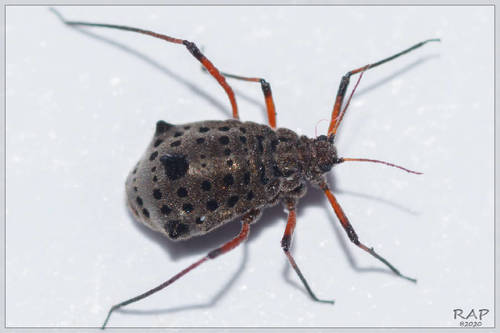
Giant Willow Aphid
Tuberolachnus salignus
Meet the giant of the aphid world. With its prehistoric appearance and unique 'shark fin' back, the Giant Willow Aphid turns every willow tree into a bustling miniature metropolis of activity.
Quick Identification
Size
Body length 5.0–5.8 mm (0.20–0.23 inches); one of the largest aphid species in the world.
Colors
Mottled grayish-brown to dark brown body with several rows of black spots; distinctive dark, horn-shaped projection on the back.
Key Features
- Large, dark 'shark fin' or horn-like tubercle on the center of the back
- Impressive size, nearly double the length of common garden aphids
- Long, spider-like legs that are dark brown or black
- Found in dense, crowded clusters specifically on willow bark
When You’ll See Them
Behavior
Giant Willow Aphids are social insects that congregate in large, dense colonies on the trunks and branches of willow trees. Unlike many other aphid species that hide on the underside of leaves, these giants are bold, occupying exposed bark where they can be easily spotted. They are phloem-feeders, meaning they use their specialized mouthparts to pierce the tree's bark and drink the sugar-rich sap. Because they consume such a high volume of liquid, they excrete massive amounts of 'honeydew,' a sticky, sweet substance that often coats the tree and the ground below.
These aphids are famous for their interactions with other species. Their honeydew is a magnet for ants, wasps, and bees. Ants often act as 'bodyguards' for the colony, protecting the aphids from predators like ladybugs in exchange for the sugary reward. When threatened, the entire colony may perform a coordinated 'kick' or wave of their hind legs to startle predators. While they are mostly wingless during the summer, winged individuals appear in late autumn to fly off and colonize new trees.
EverydayEarth exclusive
Camera Tips
Capturing the Giant Willow Aphid requires a shift in perspective, as these are macro subjects. To find them, look for the 'honeydew signature' on your willow trees: leaves that look unnaturally shiny or a black, sooty mold growing on the lower branches. This is a sure sign that a colony is active directly above. Position your camera approximately 5 to 10 inches away from the bark of a mid-sized branch where you see a cluster forming. Because they don't move quickly, you don't need a high shutter speed, but a stable mount or tripod is essential to keep the focus sharp.
For the best results, use a macro lens or a camera with a dedicated 'macro mode.' If you are using an AI-powered backyard camera, try to mount it on the tree trunk itself or a nearby sturdy branch. Lighting is crucial for showing off their unique anatomy; side-lighting (where the sun hits the branch from the left or right) will beautifully highlight the 'shark fin' tubercle on their backs, which is their most identifying feature. If the colony is in a shaded area, a small external LED light can help pop the details of their mottled brown bodies.
Don't just look for the aphids—watch for the 'supporting cast.' Set your camera to record short video clips rather than still photos to capture the fascinating behavior of ants 'milking' the aphids or wasps hovering nearby to collect honeydew. In the late autumn, you might even capture birds like kinglets or warblers picking aphids off the bark. Because they remain active well into the cold months, they provide a great opportunity for backyard wildlife photography when most other insects have gone dormant.
Similar Species
Species that look similar or are commonly confused with Giant Willow Aphid.
Frequently Asked Questions
Record Giant Willow Aphid at your habitat
Connect a camera to start building your own species record — AI identifies every visitor automatically.