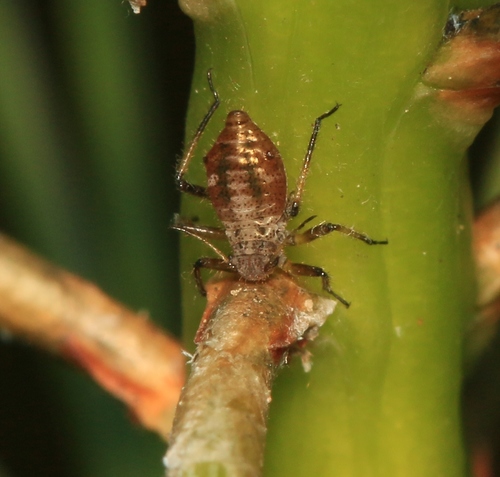
Large Pine Aphid
Cinara pinea
The Large Pine Aphid is a master of the miniature forest, a 'spider-like' insect that thrives in the needles of the Scots Pine. Often found being 'milked' by ants, these large aphids are essential players in the complex ecosystem of your backyard evergreens.
Quick Identification
Size
Body length 3.5 to 5.5 mm (0.14 to 0.22 inches); leg span can make them appear significantly larger.
Colors
Mottled grayish-brown to orange-brown body with rows of darker spots; dark brown or black legs.
Key Features
- Exceptionally large size for an aphid
- Long, spindly dark legs
- Mottled brown camouflage pattern
- Found exclusively on pine trees, usually Scots Pine
When You’ll See Them
Behavior
The Large Pine Aphid is a specialized sap-sucker that spends its life cycle almost entirely on pine trees, with a strong preference for the Scots Pine (*Pinus sylvestris*). Unlike many smaller aphids that hide on the underside of leaves, these insects are quite visible, often congregating in large groups on the bark of young shoots or nestled between bundles of pine needles. They use their long, needle-like mouthparts to tap into the tree's phloem, drinking the nutrient-rich sap to fuel their growth.
These aphids are famous for their symbiotic relationship with ants. As they feed, they excrete a sugary liquid called honeydew. Wood ants and other garden species will 'herd' and protect the aphids from predators like ladybugs and lacewings in exchange for this sweet treat. While they are relatively slow-moving, their long legs allow them to scramble quickly through the prickly environment of a pine branch if they feel threatened by a predator's touch.
EverydayEarth exclusive
Camera Tips
Capturing the Large Pine Aphid on camera requires a dedicated macro approach, as their small size makes them invisible to standard trail cameras. To find a colony, look for 'ant highways' on the trunk of a Scots Pine; follow the ants, and they will usually lead you directly to a cluster of aphids on the outer branches. Once located, use a camera with a macro lens or a high-quality clip-on macro attachment for a smartphone.
Placement is critical because depth of field is very shallow at this scale. Use a flexible tripod or a 'magic arm' clamp to secure your camera to a neighboring branch, ensuring the lens is parallel to the shoot where the aphids are feeding. This keeps as many individuals in focus as possible. Because pine trees often create dense shade, you will likely need an external light source—a small LED panel or a ring light will highlight the intricate mottled patterns on their bodies and the glistening droplets of honeydew they produce.
For the most compelling footage, use a time-lapse setting with an interval of 10 to 30 seconds. This will compress their slow movements and reveal the fascinating social interactions between the aphids and their ant guardians. If your camera has a 'motion' trigger, it likely won't be sensitive enough for the aphids themselves, but it might be triggered by the much faster-moving ants or predatory ladybugs, providing a window into the life-and-death dramas occurring on a single pine twig.
Similar Species
Species that look similar or are commonly confused with Large Pine Aphid.
Frequently Asked Questions
Record Large Pine Aphid at your habitat
Connect a camera to start building your own species record — AI identifies every visitor automatically.