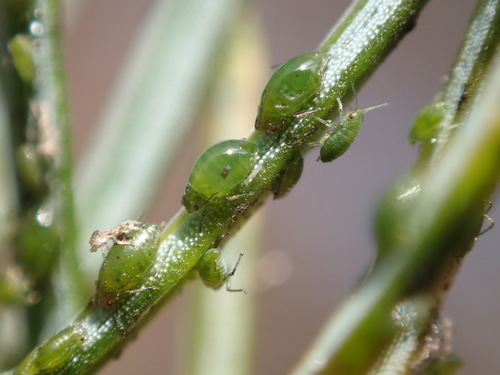
Spruce Aphid
Elatobium abietinum
A tiny green marvel with striking red eyes, the Spruce Aphid is a master of the cool season. While small, these sap-sucking insects can transform the look of your backyard evergreens in a single spring.
Quick Identification
Size
1.0–1.8 mm (0.04–0.07 inches) in length
Colors
Bright grass-green to olive-green body with distinctive dull red eyes
Key Features
- Bright green pear-shaped body
- Distinctive red eyes
- Found primarily on the underside of spruce needles
- Lack of noticeable honey-tubes (siphunculi) compared to other aphids
When You’ll See Them
Behavior
The Spruce Aphid is a remarkably resilient insect that thrives when most other backyard bugs are dormant. Unlike many species that wait for the heat of summer, these aphids are most active during the cool months of late winter and early spring. They are sap-suckers, using their needle-like mouthparts to pierce the foliage of spruce trees, particularly older needles deep within the canopy. Because they reproduce through parthenogenesis—a process where females produce live young without mating—their populations can explode rapidly in favorable conditions.
While they are largely sedentary, Spruce Aphids can cause significant aesthetic and health issues for their host trees. As they feed, they inject toxic saliva that breaks down the chlorophyll in the needles, causing them to turn yellow and eventually drop off. Interestingly, they are rarely seen by casual observers because they prefer the shaded, inner parts of the tree, staying protected from direct sunlight and heavy rain.
EverydayEarth exclusive
Camera Tips
Capturing high-quality footage of the Spruce Aphid requires a specialized approach because of their microscopic size. Standard trail cameras will likely produce blurry images if placed too close, so we highly recommend using an AI-powered camera with a dedicated macro lens or a 'close-focus' attachment. Position your camera just a few inches away from a branch showing early signs of yellowing. Since these aphids prefer the underside of needles, angle your lens upward from beneath a branch to see the colony clearly.
Lighting is your best friend when filming such tiny subjects. Because Spruce Aphids are translucent green, they can easily disappear against the needle. Try to set your camera in a position where natural morning light filters through the branch from the side; this 'backlighting' effect will make their bodies glow and highlight their red eyes. Avoid using a heavy flash, which can create a white-out effect on the reflective surface of the spruce needles.
One of the most rewarding ways to document Spruce Aphids is through time-lapse photography. Set your camera to take a photo every 15 to 30 minutes over the course of a week. This allows you to witness the 'explosion' of the colony as females give birth to live nymphs. You might also catch fascinating interactions with other backyard wildlife, such as ladybugs or hoverfly larvae arriving to feast on the aphid colony.
Finally, look for 'indicator species' to help you place your camera. If you notice an unusual amount of ant activity on your spruce branches, or if you see wasps hovering around the needles, it’s a sign that Spruce Aphids are present. Ants 'farm' the aphids for their sweet honeydew secretions, so following the ants will lead you directly to the best spot for your camera setup.
Similar Species
Species that look similar or are commonly confused with Spruce Aphid.
Green Peach Aphid
The Green Peach Aphid is found on a wide variety of flowers and vegetables rather than spruce trees, and lacks the bright red eyes of the Spruce Aphid.
Pine Bark Adelgid
These appear as white, woolly tufts on the bark and needles of white pines, whereas Spruce Aphids are naked, green, and found on spruce.
Frequently Asked Questions
Record Spruce Aphid at your habitat
Connect a camera to start building your own species record — AI identifies every visitor automatically.