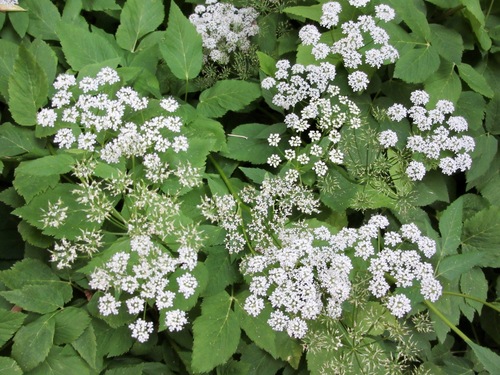
Goutweed
Aegopodium podagraria
A resilient survivor of the shade, Goutweed creates lush green carpets where other plants struggle. Known for its persistent roots and delicate white flower umbrellas, it is a fascinating example of botanical engineering in the backyard.
Quick Identification
Size
Grows 30–100 cm (12–39 inches) tall; spreads indefinitely via underground rhizomes.
Colors
Bright to medium green leaves; some ornamental varieties feature white or cream variegated edges. Flowers are tiny and brilliant white.
Key Features
- Groups of three leaves (ternate) that resemble elder tree foliage
- Hollow, grooved stems that are triangular in cross-section
- Flat-topped clusters of tiny white flowers called umbels
- Extensive, creeping white underground root system (rhizomes)
When You’ll See Them
Behavior
In the backyard ecosystem, Goutweed acts as a tough survivor. It is incredibly resilient to mowing, trampling, and poor soil conditions. Historically, it was imported to various regions as a 'set it and forget it' groundcover, but its aggressive nature has led it to be classified as an invasive species in many parts of North America and Australia. Despite its reputation among gardeners, it serves as an important structural plant in shady areas where few other species can thrive.
EverydayEarth exclusive
Camera Tips
If you are using a motion-detecting camera, position it about 12 to 18 inches off the ground and aim it at the flat-topped flower clusters (the umbels) during the months of June and July. While the plant itself won't trigger the sensor, the high volume of pollinators it attracts certainly will. You can expect to capture high-quality footage of hoverflies, soldier beetles, and various solitary bees that frequent these broad 'landing pads' for nectar.
For the best identification shots, try to place your camera in a spot that receives 'dappled' sunlight rather than direct noon-day sun. The bright white flowers are highly reflective and can often appear as a blurry white blob (blown-out highlights) on digital sensors if the light is too harsh. Shady conditions help preserve the intricate detail of the individual tiny florets that make up the larger flower head.
Monitor your camera's night vision (IR) settings around Goutweed. The broad, flat leaves can reflect IR light strongly, potentially overexposing any animals that walk in front of them. If you notice your nighttime fox or raccoon videos are too bright, try angling the camera slightly away from the densest patches of Goutweed foliage to reduce 'bounce-back' glare.
Similar Species
Species that look similar or are commonly confused with Goutweed.
Frequently Asked Questions
Record Goutweed at your habitat
Connect a camera to start building your own species record — AI identifies every visitor automatically.