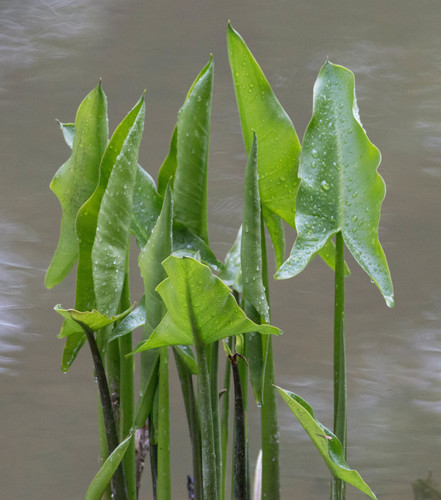
Green Arrow Arum
Peltandra virginica
A structural masterpiece of the marsh, the Green Arrow Arum stands as a lush, emerald guardian of the shoreline. With its iconic arrow-shaped leaves and secretive green blooms, it offers a fascinating window into the hidden life of North American wetlands.
Quick Identification
Size
Foliage typically stands 1–3 feet (30–90 cm) tall. Individual leaves range from 4 to 30 inches (10–75 cm) in length.
Colors
Waxy, deep emerald green leaves; flowering spathe is a pale to medium green; mature fruits are dark green to blackish-purple.
Key Features
- Prominent arrow-shaped (sagittate) leaves with three distinct veins
- A fleshy, leaf-like green sheath (spathe) surrounding a flower spike
- Thick, succulent stems that emerge from a central clump
- Distinctive downward-curving seed heads that submerge when mature
When You’ll See Them
Behavior
Green Arrow Arum is a resilient perennial that acts as a structural anchor for wetland ecosystems. Unlike many aquatic plants that boast vibrant flowers to attract bees, this species employs a more subtle strategy. Its green flowering spathe remains mostly closed, creating a private chamber for specialized pollinators, particularly small flies. It thrives in anaerobic (low oxygen) mud where its thick rhizomes can grow undisturbed for years, providing essential cover for small fish, frogs, and aquatic insects.
One of the most fascinating 'behaviors' of this plant is its method of seed dispersal. After pollination, the flower stalk (peduncle) begins to coil or bend downward, eventually submerging the heavy, berry-filled head into the mud or water. This ensures the seeds are planted in the ideal moist environment for germination. Over time, large colonies can form, helping to protect shorelines from erosion by dampening the impact of waves and slow-moving currents.
EverydayEarth exclusive
Camera Tips
To capture the best footage of Green Arrow Arum, place your camera on a low tripod or a ground stake right at the water’s edge. Aim for a 'worm's eye view'—about 12 to 15 inches off the ground—angled slightly upward. This perspective highlights the architectural, arrow-like shape of the leaves against the sky or water surface. Since these plants don't move, they are perfect subjects for testing your camera's manual focus and macro settings to capture the fine texture of the leaf veins.
If you are interested in the 'wildlife' aspect of this plant, focus your lens specifically on the spathe (the green flower sheath) during late spring and early summer. Many species of small flies, particularly the genus Elachiptera, are attracted to the plant for mating and egg-laying. Setting your camera to a high-trigger-speed video mode or a 5-second interval time-lapse can reveal a surprisingly busy world of insect activity hidden within the green folds of the plant.
Time-lapse photography is the ultimate way to document the Green Arrow Arum. Set your camera to take one photo every 30 minutes over the course of a week in late spring to watch the dramatic unfurling of the large leaves. Later in the season, you can move the camera to a multi-day interval to capture the fascinating 'bowing' motion as the heavy seed head slowly lowers itself into the water to plant the next generation.
For the best lighting, aim for the 'golden hours' of shortly after sunrise or before sunset. The waxy surface of the leaves can cause harsh glares in midday sun, which might overexpose your images. If your camera allows for it, adjusting the exposure compensation down slightly (-0.5 or -1.0) can help preserve the rich, deep green tones that make this plant so visually striking.
Similar Species
Species that look similar or are commonly confused with Green Arrow Arum.
Frequently Asked Questions
Record Green Arrow Arum at your habitat
Connect a camera to start building your own species record — AI identifies every visitor automatically.