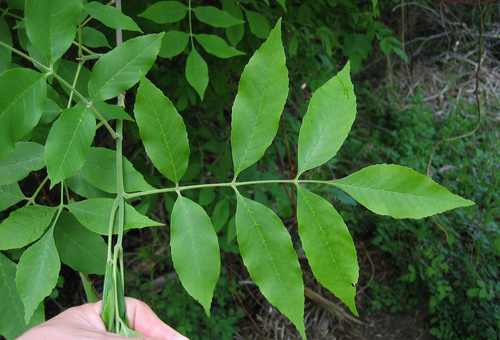
green ash
Fraxinus pennsylvanica
The green ash is a resilient backbone of the American landscape, offering a golden autumn display and a vital sanctuary for backyard wildlife. Its diamond-furrowed bark and winged seeds make it an unmistakable icon of the forest and the suburb alike.
Quick Identification
Size
Height of 15–25 m (50–80 ft) with a trunk diameter up to 0.6 m (2 ft)
Colors
Ashy gray-to-brown bark; dark green leaves that turn vibrant yellow in autumn; small, inconspicuous flowers
Key Features
- Opposite, pinnately compound leaves with 5-9 leaflets
- D-shaped leaf scars where the bud sits flush on top
- Deeply furrowed bark forming a distinct diamond pattern
- Single-winged seeds (samaras) shaped like a canoe paddle
When You’ll See Them
Behavior
The green ash is a hardy, fast-growing deciduous tree that plays a vital role in the ecosystem as both a provider of dense shade and a primary food source for local fauna. It is remarkably adaptable, capable of thriving in both swampy floodplains and dry suburban landscapes. During the spring, it produces subtle flowers before the leaves fully emerge, signaling the start of the growing season for surrounding wildlife.
As a 'pioneer species,' it is often one of the first trees to colonize disturbed areas. In a backyard setting, it acts as a central hub for biodiversity; its nectar attracts early-season pollinators, while its complex bark structure provides a home for various insects. Humans have long valued the tree for its tough, flexible wood, which is used for everything from tool handles to baseball bats.
EverydayEarth exclusive
Camera Tips
To capture the true essence of a green ash, position your camera 10 to 15 feet away from the main trunk to document its seasonal transitions. A time-lapse setting is particularly effective here; by taking one photo every day at noon, you can create a stunning visual record of the 'leaf-out' in spring and the brilliant yellow foliage change in the fall.
If you want to capture the wildlife that the tree supports, mount your camera directly to a sturdy branch about 5 to 7 feet off the ground, angled slightly downward toward the trunk. This is the 'highway' for nuthatches, woodpeckers, and squirrels. During late summer and autumn, aim a camera toward the seed clusters (samaras) to catch birds like evening grosbeaks or finches feeding on the wing.
Because the bark of the green ash has deep, textured furrows, use a camera with high-dynamic range (HDR) settings to ensure the shadows within the bark don't get 'blown out' in direct sunlight. Early morning or late afternoon light—the 'golden hour'—is the best time to highlight the unique diamond patterns of the bark. In winter, the tree remains a great subject; use motion-sensing triggers to catch deer or rabbits seeking shelter beneath its canopy.
Similar Species
Species that look similar or are commonly confused with green ash.
Frequently Asked Questions
Record green ash at your habitat
Connect a camera to start building your own species record — AI identifies every visitor automatically.