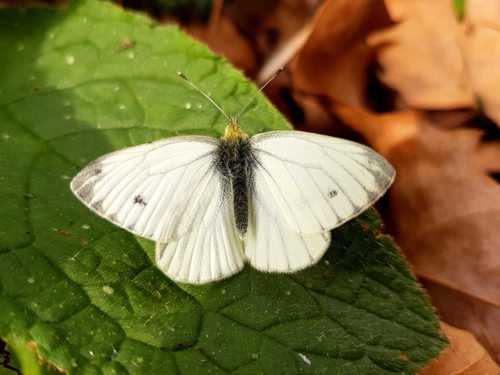
Green-veined White
Pieris napi
A delicate specialist of the shade, the Green-veined White is famous for the intricate, mossy patterns on its underwings. It is a welcome, harmless guest that brings life to the cooler, damp corners of your backyard.
Quick Identification
Size
Wingspan of 40-52 mm (1.6-2.0 inches)
Colors
Creamy white upper wings with black tips; the underside features prominent greenish-grey scales following the wing veins.
Key Features
- Distinctive grey-green 'veins' on the underside of hindwings
- Faint black tips on the upper forewings
- Fluttering, low-altitude flight pattern
- One or two black spots on the forewings depending on the sex
When You’ll See Them
Behavior
The Green-veined White is a graceful and resilient visitor to the garden, often distinguished from its 'cabbage white' relatives by its preference for damp, shaded environments. Unlike many butterflies that thrive in the blazing heat of open fields, this species is frequently found patrolling woodland edges, hedgerows, and the cooler corners of suburban backyards.
They are active throughout the day, moving with a purposeful yet erratic flight as they seek out nectar. While they are solitary flyers, you may notice multiple individuals congregating around a particularly lush patch of wildflowers. They are harmless to garden crops, as their caterpillars prefer wild crucifers over the cultivated vegetables favored by other white butterfly species.
EverydayEarth exclusive
Camera Tips
To successfully capture the Green-veined White on an AI-powered camera, you must focus on 'micro-habitats.' These butterflies are specialists of the shade, so avoid placing your camera in wide-open, scorched lawns. Instead, find a damp corner of the garden near a hedge or under a canopy of trees where flowers like Cuckooflower or Garlic Mustard are present. Position the camera at a height of 2 to 3 feet, which aligns with their typical low-flying patrol height.
Because the most distinctive feature of this butterfly is the greenish veining on the underside of the wing, try to angle your camera to capture side-profile shots. Setting up your camera near a favorite 'perch'—a tall blade of grass or a specific flower head—is more effective than trying to catch them mid-flight. Use a high-speed trigger setting or video mode to manage their quick, fluttering movements, ensuring the AI has enough frames to lock onto the wing patterns.
Early morning is a golden opportunity for high-quality photography. Before the sun fully warms the air, Green-veined Whites are often sluggish and can be found resting on foliage with their wings closed. This is the perfect time to get a crisp, clear image of the namesake green veins. If you are using a lure, avoid traditional 'butterfly feeders' with sugar water; instead, ensure you have a small damp patch of soil or a 'puddling station,' as these butterflies are often attracted to the minerals found in moist mud.
Similar Species
Species that look similar or are commonly confused with Green-veined White.
Frequently Asked Questions
Record Green-veined White at your habitat
Connect a camera to start building your own species record — AI identifies every visitor automatically.