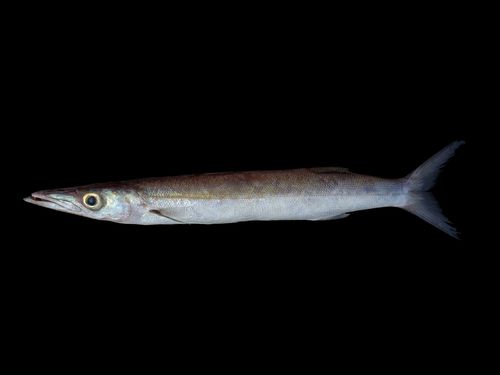
Guachanche Barracuda
Sphyraena guachancho
A sleek and shimmering predator of the Atlantic shallows, the Guachanche Barracuda is a master of the high-speed ambush. Often found patrolling piers and estuaries, this toothy speedster is a thrilling discovery for any coastal observer.
Quick Identification
Size
Typically 35–50 cm (14–20 inches) in length, though they can reach a maximum of 100 cm (3.3 feet) and weigh up to 1.8 kg (4 lbs).
Colors
Brilliant silver on the sides and belly with a contrasting olive-green or bluish-gray back; young may display faint dusky blotches along the lateral line.
Key Features
- Elongated, torpedo-shaped body
- Lower jaw projects significantly beyond the upper jaw
- Large, sharp teeth visible even when mouth is closed
- Silvery sides lack the large black blotches found on larger barracuda species
- Two widely separated dorsal fins
When You’ll See Them
Geographic range
Where Does the Guachanche Barracuda Live?
This species is widely distributed across the warm-temperate and tropical waters of the Atlantic Ocean. In the Western Atlantic, its range extends from the coast of Massachusetts down through the Gulf of Mexico and the Caribbean Sea to southern Brazil. Across the ocean in the Eastern Atlantic, the Guachanche Barracuda is commonly found from the shores of Senegal south to Angola, making it a truly trans-Atlantic coastal resident.
Basemap © OpenStreetMap contributors
Behavior
The Guachanche Barracuda is a highly energetic schooling predator that prefers the murky, turbid waters of the coastal shelf. Unlike its larger, often solitary relative the Great Barracuda, this species frequently congregates in small to medium-sized groups to hunt. They are remarkably fast swimmers, utilizing a 'sit-and-wait' or slow-cruising strategy before launching a lightning-fast strike at unsuspecting prey.
These fish are generally wary of humans but are frequently encountered by divers and pier fishers in shallow bays. They exhibit a high level of curiosity toward shiny objects or rapid movements in the water, which are often mistaken for the shimmering scales of baitfish. In social terms, they are not territorial but tend to stay within a specific home range where food is plentiful, such as near estuaries or reef edges.
EverydayEarth exclusive
Camera Tips
To capture high-quality footage of the Guachanche Barracuda, an underwater camera setup is mandatory. If your property borders a canal, bay, or pier, mount your camera to a submerged piling or use a weighted tripod on the seafloor. Position the lens to face the open water or toward a structure that attracts baitfish, as barracudas spend much of their time patrolling these 'buffet lines' just out of sight of their prey.
Using an artificial attractant can significantly increase your success rate. A submersible green LED light is particularly effective at night; while the barracuda is primarily active during the day, the light attracts the small fish and squid they eat, often keeping the predators nearby into the twilight hours. During the day, the shimmering reflection of the sun on the water can cause overexposure, so angle the camera slightly downward to capture the fish's silver body against the darker seabed for better contrast.
Since these fish move at incredible speeds, your camera settings are vital. Use a frame rate of at least 60 frames per second (fps) to avoid motion blur during a strike. If you are using an AI-powered camera like EverydayEarth, set your motion detection sensitivity to high. The quick, darting movements of a barracuda can be brief, and you want the recording to trigger the moment that silver flash enters the frame.
Maintenance is the final key to success in saltwater environments. Check your housing weekly for salt crusting or algae growth on the lens, which will degrade image quality and confuse AI identification software. A quick wipe with a soft cloth and fresh water will keep your 'backyard' underwater views crystal clear and ready for the next high-speed chase.
Similar Species
Species that look similar or are commonly confused with Guachanche Barracuda.
Frequently Asked Questions
Record Guachanche Barracuda at your habitat
Connect a camera to start building your own species record — AI identifies every visitor automatically.