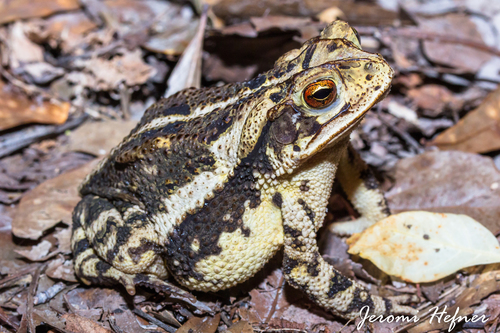
Gulf Coast Toad
Incilius nebulifer
A rugged survivor of the Southern landscape, the Gulf Coast Toad is a common garden visitor known for its striking stripes and calm personality. This adaptable amphibian is a master of the night, patrolling backyard shadows for garden pests.
Quick Identification
Size
2 to 5 inches (5 to 12.5 cm) in length
Colors
Usually shades of brown, gray, or olive with a prominent light-colored dorsal stripe. Features a distinctive dark lateral stripe on each side bordered by a lighter line.
Key Features
- Prominent cranial crests forming a 'valley' between the eyes
- Broad, light-colored stripe running down the center of the back
- Dark brown or black lateral stripe along the flanks
- Rough, warty skin with a stocky build
When You’ll See Them
Behavior
Gulf Coast Toads are exceptionally resilient and have become one of the most common amphibians in human-altered landscapes. Unlike many sensitive amphibian species, they thrive in suburban gardens, urban parks, and even near busy coastal resorts. They are primarily solitary and spend their days hiding in cool, damp spots like under mulch, leaf litter, or decorative garden stones to avoid the heat of the sun.
When night falls, these toads emerge to hunt. They are 'sit-and-wait' predators, often claiming a specific 'perch' near a light source where they wait for insects to be drawn in. They are known for their calm demeanor around humans and will often allow close observation. During the spring and summer breeding season, especially after heavy rains, males will move to water sources and emit a long, high-pitched trill to attract mates.
EverydayEarth exclusive
Camera Tips
To capture the best footage of a Gulf Coast Toad, you need to think low. These toads spend their entire lives on the ground, so mount your camera just a few inches above the soil. A small tripod or a brick mount works perfectly. Angle the lens slightly downward—about 10 to 15 degrees—to ensure you capture the intricate patterns of their cranial crests and the distinct stripe along their spine.
One of the most effective ways to guarantee a 'visit' is to take advantage of their feeding habits. Position your camera near a low-profile garden light or an area illuminated by a porch light. These lights act as natural insect magnets, and the toads will quickly learn to frequent these spots for an easy meal. Placing a shallow, ground-level water dish (like a terracotta plant saucer) in front of the camera can also attract them, particularly during hot, dry spells when they need to rehydrate through their skin.
Because toads move in short, sudden hops followed by long periods of stillness, set your camera to a high-sensitivity trigger with a short video duration (10-15 seconds). This helps you catch the action of them striking at prey without filling your SD card with footage of a stationary toad. If your camera supports it, use 'Near Field' or 'Macro' settings, as these toads are small subjects and you'll want the sharpest detail possible on their warty texture.
Seasonally, the best time to deploy your camera is immediately following a thunderstorm in late spring or summer. The humidity and rain trigger intense activity. Look for 'toad runs'—flattened paths in the grass or mulch near the edges of your house or garden beds—and set your camera there. If you are recording video with audio, you might even capture the male's melodic trilling, which is a fantastic addition to any backyard wildlife collection.
Similar Species
Species that look similar or are commonly confused with Gulf Coast Toad.
Frequently Asked Questions
Record Gulf Coast Toad at your habitat
Connect a camera to start building your own species record — AI identifies every visitor automatically.