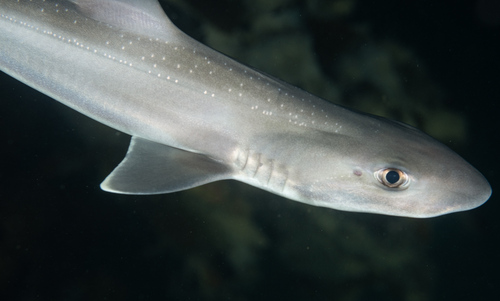
Gummy Shark
Mustelus antarcticus
The Gummy Shark is the gentle 'vacuum cleaner' of the Australian seafloor, known for its distinctive white spots and toothless, grinding smile. This docile species is a favorite for coastal residents and a vital part of the southern marine ecosystem.
Quick Identification
Size
1.5–1.75 metres (4.9–5.7 feet) in length; weighs up to 25 kg (55 lbs)
Colors
Bronzy-grey to greyish-brown upper body covered in small white spots; pale white or cream underbelly
Key Features
- Rows of small, flat, grinding teeth instead of sharp fangs
- Slender, streamlined body with two large dorsal fins and no spines
- Prominent white spots across the dorsal surface and sides
When You’ll See Them
Geographic range
Where Does the Gummy Shark Live?
The Gummy Shark is a signature species of the temperate waters surrounding the southern half of Australia. Its native range extends from the mid-coast of New South Wales, wrapping around the southern coastline including Tasmania, and stretching up to Shark Bay in Western Australia. These sharks are most densely populated in the Bass Strait and the Great Australian Bight, where the cool, nutrient-rich waters provide the perfect environment for their primary prey.
Basemap © OpenStreetMap contributors
Behavior
Gummy Sharks are predominantly bottom-dwelling creatures that spend much of their lives cruising just above the seafloor. Unlike the more aggressive predatory sharks often depicted in media, Gummy Sharks are docile and pose very little threat to humans. They are social animals and are often found in large schools, particularly when migrating or during peak feeding times in the cooler southern waters.
Their behavior is largely dictated by the tide and the lunar cycle. They use a highly developed sense of smell to track down prey hiding in the sand. When interacting with humans, they are generally shy and will swim away if approached too quickly, though they are a common sight for divers and snorkelers in shallow bays and estuaries along the southern Australian coast.
EverydayEarth exclusive
Camera Tips
Capturing a Gummy Shark on camera requires a specialized underwater approach. If you have a property bordering a saltwater canal, estuary, or jetty, use a 'BRUV' (Baited Remote Underwater Video) setup. This involves mounting a waterproof action camera to a weighted frame—a simple PVC or stainless steel rig works well. Position the lens horizontally, about 30–50 cm above the sandy floor, to capture the shark's side profile as it searches for food.
Bait is the secret to success with this species. Use a perforated container or mesh bag filled with 'burley'—oily fish scraps, crushed crab shells, or squid. The scent trail will travel with the current, drawing Gummy Sharks from several hundred meters away. Ensure your camera is set to a wide-angle view to catch their sleek movement, and if your camera supports it, use a high frame rate like 60fps for smoother playback of their fluid swimming style.
Timing is critical for backyard coastal cameras. Gummy Sharks are most active during the transition of the tides, especially an incoming high tide at night. If you are filming after dark, you will need powerful underwater LED lights. To avoid over-exposing the shark’s reflective white spots, try to angle the lights slightly away from the center of the frame. In areas with high water clarity, you can capture stunning footage during the day by placing the camera near the edge of a seagrass bed where the sharks come to hunt.
Similar Species
Species that look similar or are commonly confused with Gummy Shark.
Frequently Asked Questions
Record Gummy Shark at your habitat
Connect a camera to start building your own species record — AI identifies every visitor automatically.