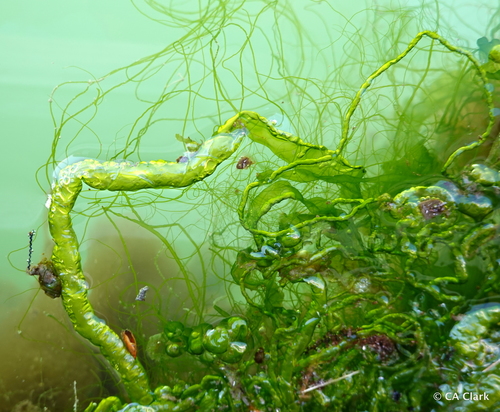
Gutweed
Ulva intestinalis
A vibrant ribbon of the rocky shore, Gutweed transforms tide pools into miniature emerald forests. This resilient green alga is a master of survival, thriving where the river meets the sea.
Quick Identification
Size
Fronds typically reach 10-40 cm (4-16 inches) in length, though they can extend to 1 meter (3.3 feet) in nutrient-rich conditions.
Colors
Vibrant emerald to lime green; may turn yellowish or white if dried out by the sun during low tide.
Key Features
- Hollow, tubular fronds that resemble small intestines
- Visible oxygen bubbles often trapped inside the tubes
- Tapered base connecting to a small discoid holdfast
- Translucent green color with no visible midrib
When You’ll See Them
Behavior
Gutweed is a resilient and opportunistic green alga that thrives in high-energy environments where other species might struggle. It is exceptionally tolerant of varying salinity levels, making it a common sight in estuaries where freshwater mixes with seawater. During the day, the alga undergoes rapid photosynthesis, often producing enough oxygen to fill its hollow tubes, which causes the fronds to float upward toward the light like emerald ribbons.
While it serves as a crucial food source and shelter for small marine invertebrates, Gutweed is also an indicator of nutrient levels in the water. In areas with high nitrogen runoff, it can grow aggressively, forming thick mats that blanket rocky shores. These mats provide a damp micro-habitat for snails and crabs during low tide, protecting them from desiccation and predators.
EverydayEarth exclusive
Camera Tips
To capture Gutweed effectively, you need to focus on its unique tubular structure and the way it interacts with the tide. If using a trail camera or a stationary AI-powered camera in a coastal backyard, position the device on a weighted tripod within a tide pool. Ensure your camera is housed in a high-quality waterproof casing (IP68 rated). Setting the camera at a low, 45-degree angle will capture the "forest" effect of the fronds as they rise with the incoming tide.
Lighting is the biggest challenge when photographing green algae. Mid-day sun can cause harsh reflections on the water's surface or make the green look washed out. If possible, use a polarizing filter over your camera lens to cut through the glare and reveal the deep, saturated greens of the Gutweed submerged beneath the surface. Time-lapse mode is particularly effective here; set the camera to take a photo every 30 seconds over a six-hour period to document the dramatic shift from flattened, dry ribbons at low tide to floating, dancing tubes at high tide.
Because Gutweed doesn't move on its own, your camera's AI might not trigger based on motion. Use a time-interval trigger instead of motion detection. For the best color definition, aim for the "golden hours" of early morning or late afternoon when the light is softer, but there is still enough UV radiation to make the green pigments pop against the dark rocks of the intertidal zone.
Similar Species
Species that look similar or are commonly confused with Gutweed.
Frequently Asked Questions
Record Gutweed at your habitat
Connect a camera to start building your own species record — AI identifies every visitor automatically.