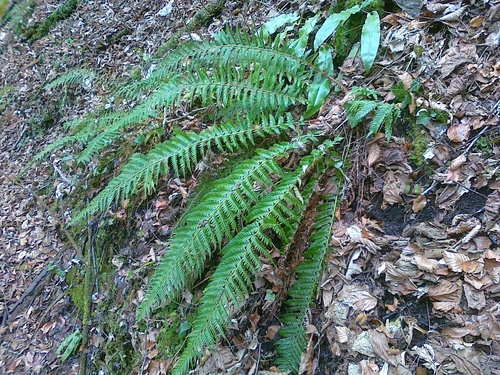
hard shield fern
Polystichum aculeatum
A resilient survivor of the ancient forest, the hard shield fern boasts glossy, leathery fronds that stay green even in the depths of winter. Its distinctive golden-scaled stems and symmetrical growth make it a masterclass in natural geometry.
Quick Identification
Size
Fronds typically 30–90 cm (12–35 in) long; crown width 60–100 cm (24–39 in)
Colors
Dark, glossy forest green fronds; stems (stipes) covered in shaggy, golden-brown or copper scales
Key Features
- Evergreen, leathery bi-pinnate fronds
- Pinnules (leaflets) feature a distinctive 'thumb' pointing toward the tip
- Stalks are densely covered in pale brown scales
- Rigid, upright 'shuttlecock' growth habit
When You’ll See Them
Geographic range
Where Does the hard shield fern Live?
Native to Europe, the hard shield fern is a quintessential resident of the temperate Atlantic regions, reaching its highest population densities in the moist, mild climates of the British Isles and western France. While it thrives in the damp western reaches of the continent, its range extends across central Europe to the Caucasus mountains. In the warmer Mediterranean south, it retreats from the lowlands, surviving only in the cool, humid microclimates of high-altitude mountain forests.
Basemap © OpenStreetMap contributors
Behavior
The hard shield fern is a hardy, perennial evergreen that provides essential structural habitat in woodland ecosystems. Unlike many other fern species that wither and go dormant during the winter, its tough, leathery fronds remain vibrant and green throughout the year, though they may gradually flatten toward the ground to make room for new growth in the spring. It grows in a symmetrical 'shuttlecock' or rosette formation, with new fronds emerging from a central crown.
As an indicator species for ancient woodlands, its presence often suggests a long-established and undisturbed ecosystem. While it does not 'behave' in the animal sense, it interacts with its environment by providing year-round shelter for ground-dwelling insects and small amphibians. It is exceptionally slow-growing and long-lived, often remaining in the same spot for decades, silently witnessing the changing seasons of the forest floor.
EverydayEarth exclusive
Camera Tips
Capturing the hard shield fern on camera requires a focus on texture and seasonal transitions rather than movement. To highlight its architectural beauty, mount your camera on a low tripod or stake roughly 12 to 18 inches above the ground. Angle the lens slightly downward toward the center of the fern's crown. This 'bird's-eye' perspective is perfect for capturing the symmetrical 'shuttlecock' shape that defines the species.
The most exciting time to film this fern is during the spring 'unfurling' (usually April to May). Set your camera to a time-lapse mode, taking one photo every 6 to 12 hours. You will capture the dramatic transformation of the shaggy, golden-brown 'crosiers' (tightly coiled fronds) as they rise and unroll into full-sized green leaves. Because ferns live in the shade, ensure your camera is positioned to catch dappled morning light, which will make the glossy green surface of the fronds pop against the dark forest floor.
Don't forget the wildlife potential! Hard shield ferns are favorite hiding spots for small garden visitors. Positioning a camera to look through the fronds can provide a natural 'blind' for filming cautious animals like hedgehogs, voles, or frogs that use the evergreen cover for protection. For the best detail, use a camera with a good macro or close-focus capability to showcase the intricate golden scales on the stem, which are a key identification feature.
Similar Species
Species that look similar or are commonly confused with hard shield fern.
Frequently Asked Questions
Record hard shield fern at your habitat
Connect a camera to start building your own species record — AI identifies every visitor automatically.