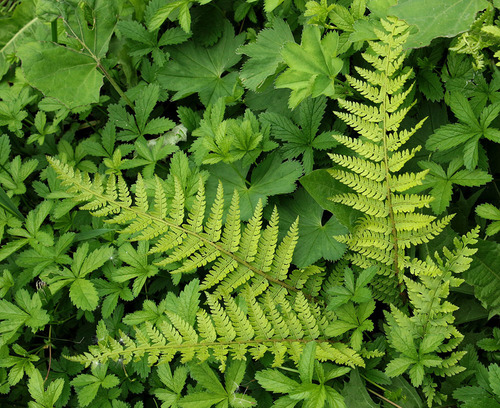
soft shield fern
Polystichum setiferum
The lace-maker of the woodland floor, the soft shield fern is a year-round beauty that provides essential shelter for the smallest backyard creatures. Its distinctive bristly leaflets and golden-scaled stems make it a favorite for shade-loving gardeners.
Quick Identification
Size
Fronds typically grow 30–120 cm (12–47 inches) long, creating a circular mound roughly 1 meter (3.3 feet) in diameter.
Colors
Lush medium-to-dark green foliage; the stalks (stipes) and midribs are heavily clothed in distinctive cinnamon-brown or golden-tan scales.
Key Features
- Bristle-tipped leaflets (pinnules) that are soft to the touch
- Dense coating of brown scales on the stem and midribs
- Fronds arranged in a symmetrical 'shuttlecock' or rosette shape
- Evergreen foliage that often remains green through the winter
When You’ll See Them
Geographic range
Where Does the soft shield fern Live?
The soft shield fern is primarily native to the temperate regions of Southern and Western Europe, where the Atlantic influence provides the moisture it craves. It is a common sight across the United Kingdom, Ireland, and France, extending southward into Spain, Italy, and the Mediterranean islands. While its core range is European, it has been widely introduced to garden environments in North America and parts of the Southern Hemisphere as a prized ornamental species.
Basemap © OpenStreetMap contributors
Behavior
The soft shield fern is a perennial plant characterized by its graceful, arching fronds that emerge from a central crown. Unlike many other ferns that wither at the first frost, this species is semi-evergreen to evergreen, providing vital structure and shelter in the garden during the winter months. In the spring, it performs a dramatic 'unfurling' as new fronds, known as croziers or fiddleheads, rise from the center, covered in soft, silvery-brown scales before expanding into their full lacy form.
As a stationary member of the backyard ecosystem, its 'behavior' is best observed through its relationship with the micro-climate it creates. Its dense, low-growing canopy offers a humid, protected environment for a variety of small creatures. While it doesn't interact with humans directly, it is a favorite for shade gardeners due to its non-invasive nature and its ability to thrive in the damp, dark corners where other plants might fail.
EverydayEarth exclusive
Camera Tips
When using an AI-powered camera to monitor a soft shield fern, think of the plant as a 'stage' for other wildlife. Position your camera on a low tripod or ground mount, angled slightly upward into the underside of the fronds. This area is a hotspot for macro-wildlife; you will often capture snails, predatory beetles, and even small amphibians like frogs or newts that use the fern's shade to stay cool and moist during the heat of the day.
In the spring (typically March to May), set your camera to a time-lapse mode if available. The way the 'fiddleheads' or croziers slowly uncoil and expand is one of nature's most beautiful slow-motion events. Because these ferns grow in deep shade, ensure your camera has good low-light sensitivity or an infrared sensor that won't overexpose the bright green of the new growth. Use a high-trigger sensitivity setting to catch the tiny insects that navigate the 'bristly' leaflets.
During the winter, the soft shield fern becomes an important focal point when other vegetation has died back. Birds like Wrens or Robins often forage among the dead leaves at the base of the fern for overwintering larvae. Position your camera to face the base of the crown to capture this foraging behavior. Avoid using heavy baits near the fern as the increased traffic from larger animals like raccoons or foxes might crush the delicate fronds; instead, let the fern's natural habitat attract the smaller, more elusive backyard residents.
Similar Species
Species that look similar or are commonly confused with soft shield fern.
Frequently Asked Questions
Record soft shield fern at your habitat
Connect a camera to start building your own species record — AI identifies every visitor automatically.