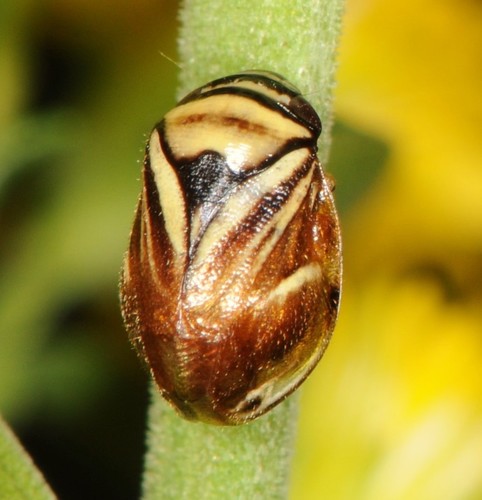
Heath Spittlebug
Clastoptera saintcyri
Look closely at the stems of your berry bushes and you might find a cluster of tiny bubbles—the secret fortress of the Heath Spittlebug. These tiny, 'humpbacked' insects are the champion jumpers of the backyard, capable of vaulting out of sight in the blink of an eye.
Quick Identification
Size
3 to 4.5 mm (0.12 to 0.18 inches) in length
Colors
Deep brown to charcoal black body, often featuring pale yellow or white transverse bands on the head and wing covers; nymphs are pale green or yellow.
Key Features
- Globose, humpbacked body shape
- Protective white frothy 'spittle' mass in nymph stage
- Transverse yellow or pale markings on the face and wings
- Powerful hind legs designed for explosive jumping
When You’ll See Them
Behavior
As adults, they abandon their bubbly homes and take to the air—or more accurately, the 'jump.' They are among the most proficient jumpers in the animal kingdom relative to their size, using a catapult-like mechanism in their hind legs to vanish from a plant stem in milliseconds if they feel threatened. They are generally solitary and spend their days quietly feeding on the xylem of their host plants, often remaining unnoticed due to their small size and dark coloration.
EverydayEarth exclusive
Camera Tips
Lighting is the biggest challenge when filming such small, dark subjects. Natural sunlight is preferred, but ensure the camera isn't facing directly into the sun, which can wash out the details of their dark wing covers. If your camera setup allows for an external light source, a small LED panel set to a low, warm setting can help highlight the yellow markings on the insect’s face. Because they are diurnal, your best chance for activity is during the warmest part of the day when adults are most likely to be moving between stems.
For the best results with AI-powered cameras, use a high-sensitivity motion setting or, better yet, a time-lapse mode. Since the movement of a 4mm insect might not always trigger a standard PIR sensor, a time-lapse interval of one photo every 20-30 seconds during peak daylight hours will ensure you catch them as they emerge from their spittle or land on a new branch. Avoid areas with high wind, as swaying branches will create hundreds of 'false' triggers and make it difficult to keep the tiny subject in focus. If you want to see the adult, wait for the spittle masses to begin drying up in early summer; this is the signal that the adults are about to emerge and begin their active jumping phase.
Similar Species
Species that look similar or are commonly confused with Heath Spittlebug.
Frequently Asked Questions
Record Heath Spittlebug at your habitat
Connect a camera to start building your own species record — AI identifies every visitor automatically.