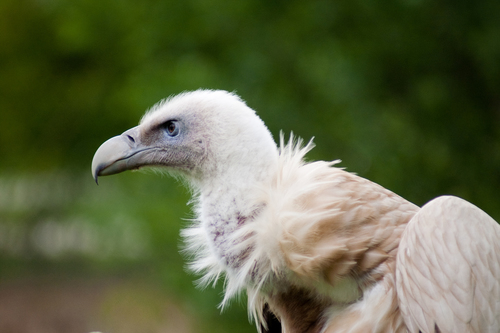
Himalayan Griffon
Gyps himalayensis
The Himalayan Griffon is a titan of the alpine skies, boasting a wingspan that can reach over ten feet. As the primary scavenger of the world's highest peaks, this magnificent vulture is an essential part of the mountain ecosystem.
Quick Identification
Size
Length: 103–130 cm (41–51 in); Wingspan: 260–310 cm (102–122 in); Weight: 8–12 kg (18–26.5 lbs)
Colors
Pale sandy-brown or buff body; dark brownish-black flight feathers and tail; white downy ruff around the neck; yellowish bill and pale blue-grey facial skin.
Key Features
- Massive wingspan with deeply slotted 'fingered' primary feathers
- Pale buff body contrasting with dark wing tips
- Small, white-fuzzed head on a long, thick neck
- Square-ended tail visible in flight
When You’ll See Them
Geographic range
Where Does the Himalayan Griffon Live?
This majestic scavenger is native to the high-altitude regions of Central Asia and the Indian subcontinent, centered primarily along the Himalayan mountain range and the vast Tibetan Plateau. Its core range spans across northern India, Nepal, Bhutan, and western China, extending north into the mountains of Mongolia, Kazakhstan, and Kyrgyzstan. While they are mostly resident to these mountain chains, younger birds are known to wander nomadically, occasionally appearing as winter visitors in Southeast Asian countries like Thailand and Cambodia.
Basemap © OpenStreetMap contributors
Behavior
Himalayan Griffons are masterful gliders, spending much of their day riding thermal updrafts to soar over high-altitude ridges. Because of their massive size, they rarely flap their wings, instead relying on air currents to patrol vast territories in search of food. They are highly gregarious birds, often congregating in large, squabbling groups around a single carcass where a strict social hierarchy determines who eats first.
While they are naturally wary of humans, they are frequently seen near mountain villages and monasteries where they act as nature's cleanup crew. They are famous for their role in 'sky burials' on the Tibetan Plateau, where they have a long-standing cultural and spiritual connection with the local people. Despite their intimidating size, they are non-aggressive scavengers that lack the powerful talons of eagles.
EverydayEarth exclusive
Camera Tips
To capture these giants on camera, focus on ridge lines or open plateaus where they are likely to land. Since they rely on thermals to take off, they often spend the early morning hours perched on cliff edges or large rocks waiting for the sun to warm the air. Aim your camera toward these prominent 'lookout' spots. If you live in a mountain region with livestock, placing a camera near open grazing areas can yield spectacular results as they frequently monitor these herds for fallen animals.
Due to the bird's immense size, trigger speed is less critical than field of view. Position your camera at a slight upward angle if placed on a slope to capture their enormous wingspan as they come in for a landing. High-resolution settings are a must, as the subtle color differences in their plumage are what distinguish them from the similar-looking Eurasian Griffon.
Lighting can be tricky in high-altitude environments. Try to face your camera north or south to avoid the harsh glare of the rising or setting sun, which can wash out the pale feathers of the bird's body. If you are using a trail camera to monitor a specific site, ensure the PIR (motion) sensor is set to its highest sensitivity, as these birds may land some distance away and slowly walk toward their destination.
Similar Species
Species that look similar or are commonly confused with Himalayan Griffon.
Frequently Asked Questions
Record Himalayan Griffon at your habitat
Connect a camera to start building your own species record — AI identifies every visitor automatically.