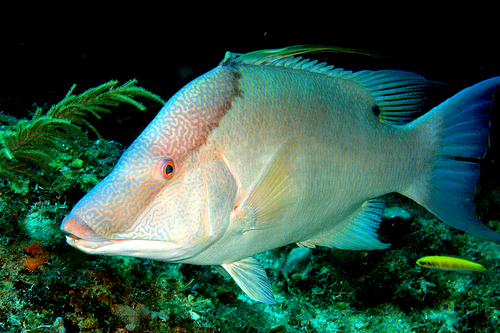
Hogfish
Lachnolaimus maximus
The Hogfish is a master of the Western Atlantic reefs, easily recognized by its pig-like snout and flowing dorsal spines. As a protogynous hermaphrodite that changes from female to male, this vibrant wrasse is as biologically fascinating as it is beautiful to observe.
Quick Identification
Size
Typically 30-91 cm (12-36 inches) in length; can weigh up to 10 kg (22 lbs).
Colors
Variable based on age and sex; generally reddish-brown to pearly grey-orange. Males possess a distinctive dark 'mask' of maroon or black stretching from the snout to the forehead.
Key Features
- Elongated, pig-like snout used for rooting in sand
- Three long, trailing filaments on the first dorsal spine
- Large dark spot at the rear base of the dorsal fin
- Deep, laterally compressed body shape
When You’ll See Them
Geographic range
Where Does the Hogfish Live?
Native to the lush marine ecosystems of the Western Atlantic Ocean, the Hogfish maintains a wide territory that begins as far north as Nova Scotia, Canada, and extends down through the eastern coast of the United States. Its core population is found in the warm, tropical waters of the Gulf of Mexico, the Caribbean Sea, and the Bahamas, eventually reaching the northern coastline of South America. This species is highly dependent on healthy reef structures and is most frequently sighted in the Florida Keys and along the Mesoamerican Barrier Reef.
Basemap © OpenStreetMap contributors
Behavior
The Hogfish is a fascinating social creature characterized by a harem-based social structure. They are protogynous hermaphrodites, meaning they all begin life as females and the most dominant individuals eventually transition into males. A single large male typically patrols a territory containing several females, defending his 'harem' from rival males and ensuring reproductive success within his patch of the reef.
By day, Hogfish are industrious foragers, using their specialized snouts to overturn sand and rubble in search of hidden prey. They are generally wary of humans but can become curious if not feel threatened. At night, they seek shelter within the reef framework or among gorgonians, where they remain motionless to avoid detection by nocturnal predators like sharks.
EverydayEarth exclusive
Camera Tips
Capturing high-quality footage of Hogfish requires an underwater camera setup, such as a GoPro in a waterproof housing or a specialized marine trail camera. For the best results, mount your camera on a weighted tripod and place it on a sandy 'halo'—the patch of sand that often surrounds a coral reef or a group of sea fans. These areas are the primary foraging grounds for Hogfish, who frequent the sand-reef interface to root for crustaceans.
To attract this species to your lens, consider using a 'bait station' (where local regulations allow). A mesh bag filled with crushed sea urchins or crab shells will create a scent trail that these inquisitive wrasses find hard to ignore. Because they are visual hunters, ensure your camera is positioned to catch the mid-day sun; Hogfish are most active between 10:00 AM and 2:00 PM when light penetration is at its peak, allowing the camera to capture their vibrant orange and red pigments which are often lost in deeper, darker water.
Be mindful of the Hogfish's shy nature. Use a camera with a wide-angle lens to capture their full profile from a distance, and avoid using high-intensity artificial lights unless necessary, as bright flashes can spook the harem. If you are using a triggered camera, set it for short video bursts rather than still photos to document their unique 'rooting' behavior in the sand, which is a hallmark of this species.
Similar Species
Species that look similar or are commonly confused with Hogfish.
Frequently Asked Questions
Record Hogfish at your habitat
Connect a camera to start building your own species record — AI identifies every visitor automatically.