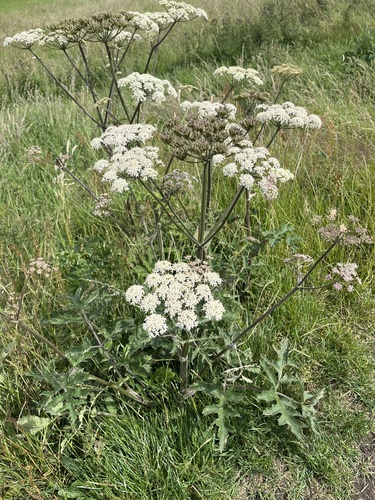
hogweed
Heracleum sphondylium
A towering architect of the summer hedgerow, common hogweed is a master of biodiversity that provides a nectar feast for countless pollinators. With its umbrella-like blooms and statuesque height, it is a fascinating, if prickly, staple of the wild backyard.
Quick Identification
Size
Height 50–200 cm (20–80 inches); flower heads up to 20 cm (8 inches) wide
Colors
Creamy-white or slightly pinkish flowers; dull green, hairy leaves; light green grooved stems
Key Features
- Large, flat-topped flower umbels with 15–30 rays
- Hollow, ridged stems covered in stiff, bristly hairs
- Broad, pinnate leaves with 3–5 lobed, saw-toothed leaflets
- Small white flowers where the outer petals are often larger than the inner ones
When You’ll See Them
Loading activity data...
Behavior
In its interaction with humans, hogweed is a plant that demands respect. While not as toxic as its larger relative, the Giant Hogweed, its sap contains furanocoumarins. These chemicals can cause the skin to become hypersensitive to sunlight, leading to rashes or mild blistering. It is a cornerstone of the summer landscape but is best observed without direct physical contact.
EverydayEarth exclusive
Camera Tips
Hogweed is an exceptional subject for backyard cameras because it acts as a natural stage for insect activity. To capture the best footage, mount your camera on a dedicated tripod or stake rather than the plant itself; hogweed stems are hollow and sway significantly in the wind, which can trigger hundreds of 'false' motion events or result in shaky video. Position the lens so it is level with the flat-topped flower heads, about 12 to 24 inches away, to document the constant rotation of beetles, bees, and hoverflies that visit the nectar-rich blooms.
For those using trail cameras with a 'Time Lapse' mode, hogweed provides a fascinating study in rapid botanical growth. Set your camera to take a photo every 60 minutes from late April through June. When played back, you will see the dramatic 'telescoping' of the stems as they reach their full height. Because the flowers are bright white, they can easily become overexposed in direct midday sun. If possible, angle your camera toward the North or South to avoid direct lens flare, or place it in a spot that receives dappled sunlight.
If you are interested in nocturnal wildlife, keep your camera running after dark. While the plant is 'inactive,' many species of moth are attracted to the pale flowers which reflect moonlight. Ensure your infrared flash is set to a 'low' or 'medium' intensity, as the highly reflective white umbels can cause a 'white-out' effect on the image if the flash is too bright or too close. In late summer, the dried seed heads remain standing and make excellent perches for small birds, providing further photo opportunities long after the flowers have faded.
Similar Species
Species that look similar or are commonly confused with hogweed.
Giant Hogweed
Much larger, reaching 5 meters in height, with sharply serrated leaves and purple-spotted stems.
Cow Parsley
Blooms earlier in the spring with much finer, fern-like foliage and smaller flower clusters.
Wild Carrot
Smaller overall with a distinctive single dark-red flower in the center of the white umbel.
Frequently Asked Questions
Record hogweed at your habitat
Connect a camera to start building your own species record — AI identifies every visitor automatically.