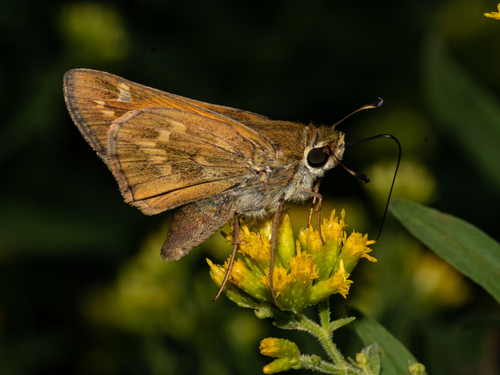
Huron Skipper
Atalopedes huron
A champion of the backyard lawn, the Huron Skipper is a fast-flying, orange-hued butterfly that brings life to late-summer gardens. Easily identified by the bold black 'Sachem' mark on the male's wings, this energetic visitor is a delight to track on camera.
Quick Identification
Size
Wingspan ranges from 3.2 to 4.5 cm (1.25 to 1.75 inches)
Colors
Males are bright tawny-orange with a prominent black 'stigma' patch; females are darker brown with a complex pattern of translucent glassy spots.
Key Features
- Large, square-shaped black scent patch (stigma) on male forewings
- Fast, erratic 'skipping' flight pattern
- Large, pale square spot in the center of the hindwing underside
- Thick, moth-like body with hooked antennae
When You’ll See Them
Behavior
The Huron Skipper, often referred to as the 'Sachem' in older field guides, is a high-energy butterfly known for its rapid, darting flight. Unlike the slow, fluttering path of a Swallowtail, these skippers zip from flower to flower with mechanical precision. Males are highly territorial; they spend much of their day perched on low-lying vegetation or bare ground, darting out to investigate any passing insect to defend their patch or find a mate.
These butterflies are frequent visitors to backyard gardens, especially in late summer. They exhibit a fascinating behavior called 'puddling,' where they congregate on damp soil or mud to mineralize. While they are generally wary of large movements, they become quite approachable when deeply engrossed in nectaring, making them excellent subjects for backyard observation.
EverydayEarth exclusive
Camera Tips
To capture high-quality footage of a Huron Skipper, camera placement is everything. These insects are attracted to 'hot spots' in your garden—specifically flat-topped flowers like Zinnias, Sedum, or Echinacea. Position your AI-powered camera approximately 12 to 18 inches away from a cluster of these blooms. Because skippers are small, a macro lens attachment or a camera with a short minimum focal distance is essential to see the intricate details of the male's black 'stigma' or the female's glassy wing spots.
Lighting plays a critical role in triggering AI detection for insects. Set your camera so the sun is behind you or hitting the flowers from the side. This illuminates the golden-orange scales of the wings and prevents the insect from appearing as a dark silhouette. Since Huron Skippers are most active during the hottest part of the day, ensure your camera is shaded or has heat-management settings enabled to prevent midday shutdowns in direct sun.
If you want to 'lure' them to a specific spot for a clear shot, try creating a small damp patch of soil nearby mixed with a pinch of sea salt. This 'puddling station' provides the minerals they crave. For camera settings, use the highest possible frame rate (at least 60fps) because their wing beats and movements are incredibly fast. A high shutter speed will help freeze the motion and prevent the 'blur' that often happens when these darting butterflies take flight.
Similar Species
Species that look similar or are commonly confused with Huron Skipper.
Frequently Asked Questions
Record Huron Skipper at your habitat
Connect a camera to start building your own species record — AI identifies every visitor automatically.