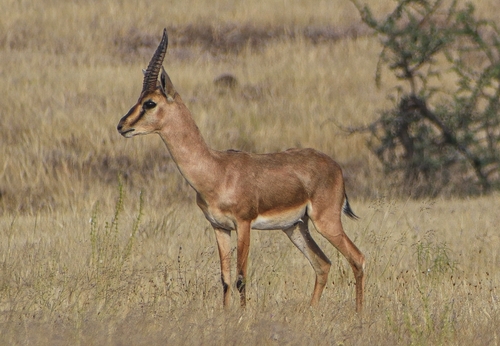
Indian Gazelle
Gazella bennettii
The Indian Gazelle, or Chinkara, is a masterpiece of desert adaptation, combining fragile beauty with incredible speed. Watch as this elusive grazer dances through the golden scrublands of the Indian subcontinent.
Quick Identification
Size
Stands about 65 cm (26 in) at the shoulder; body length of 100 cm (39 in); weight ranges from 20-25 kg (44-55 lbs)
Colors
Sandy-buff to reddish-tan upper body with a crisp white underbelly; dark facial stripes extending from the eyes to the muzzle
Key Features
- Slender, S-shaped ringed horns present in both sexes (larger in males)
- Distinctive white streaks on the face
- Small, black-tipped tail that twitches constantly
- Delicate, spindly legs adapted for rocky and sandy terrain
When You’ll See Them
Geographic range
Where Does the Indian Gazelle Live?
Native to the Southern Asian continent, the Indian Gazelle is primarily found across the arid heartlands of India, particularly within the states of Rajasthan, Gujarat, and Madhya Pradesh. Its geographic footprint extends westward through the plains of Pakistan and into the dry, elevated plateaus of southern Iran and eastern Afghanistan. As a specialist of dry zones, it thrives in the Thar Desert and the Deccan Plateau, remaining a resilient fixture of the region's sun-drenched scrublands.
Basemap © OpenStreetMap contributors
Behavior
The Indian Gazelle, commonly known as the Chinkara, is a remarkably shy and alert species that thrives in the harsh, arid environments of South Asia. They are renowned for their ability to survive for long periods without drinking water, as they derive most of their hydration from succulent plants, fruits, and morning dew. When startled, they exhibit a unique behavior called 'stotting' or 'pronking,' where they leap high into the air with all four legs stiff, serving as a visual warning to predators and a display of their agility.
These mammals are generally found in small herds of three to ten individuals, though adult males are often seen roaming solo. They are crepuscular, meaning they are most active during the cooler transition periods of dawn and dusk. In areas near human settlements, they may shift toward more nocturnal patterns to avoid detection. While they are not strictly territorial, they do frequent specific communal dung heaps, known as latrines, which serve as communication hubs for local populations.
EverydayEarth exclusive
Camera Tips
To successfully capture the Indian Gazelle on a trail camera, placement height is critical. Set your camera relatively low to the ground—about 24 to 30 inches high—to capture their delicate facial features and horns at eye level. Aim the lens toward established game trails or near natural 'latrine' sites where they frequently congregate to mark territory. Because they have an incredible sense of smell and hearing, use a camera with a completely silent shutter and avoid visiting the site more than once every two weeks to keep human scent to a minimum.
While these animals are drought-tolerant, they are highly attracted to water during the peak of the dry season (April to June). Placing a camera near a small watering hole or a leaking irrigation pipe on the edge of a farm can yield spectacular results. Use 'No-Glow' infrared flash settings; the Chinkara is extremely skittish, and a visible red glow or a white flash will likely cause them to bolt and avoid that specific location for weeks.
For the most engaging footage, set your camera to video mode or a 3-5 image burst. The Indian Gazelle is a nervous mover, often flicking its tail and twitching its ears, which looks much better in motion than in a static photo. If you are setting up in a backyard or orchard on the edge of their range, a simple salt lick can act as a safe, long-term lure that encourages them to pause long enough for the camera to trigger. Peak activity occurs in the first two hours of sunlight, so ensure your camera has fresh batteries to handle the high volume of morning triggers.
Similar Species
Species that look similar or are commonly confused with Indian Gazelle.
Frequently Asked Questions
Record Indian Gazelle at your habitat
Connect a camera to start building your own species record — AI identifies every visitor automatically.