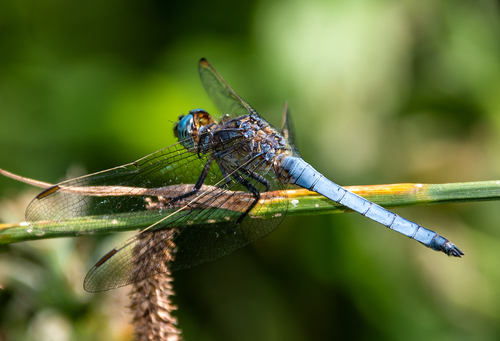
Keeled Skimmer
Orthetrum coerulescens
A slender, sky-blue sentinel of the summer wetlands, the Keeled Skimmer is a favorite for backyard observers. Watch as these territorial pilots defend their sunny perches with acrobatic precision.
Quick Identification
Size
Body length 39–45 mm (1.5–1.8 inches); wingspan 60–70 mm (2.4–2.8 inches)
Colors
Mature males feature a powdery sky-blue abdomen and brownish thorax. Females and immatures are golden-yellow to ochre with a thin black line down the center of the abdomen.
Key Features
- Distinctive raised ridge or 'keel' running down the center of the abdomen
- Male abdomen is entirely blue without a black tip
- Pale brown or yellowish wing spots (pterostigma)
- Relatively small and slender compared to other blue skimmers
When You’ll See Them
Behavior
Unlike some of their larger relatives that patrol high above the water, Keeled Skimmers stay low. Their flight is fast and darting but usually covers short distances. They are sun-lovers, requiring the warmth of the day to reach the body temperatures necessary for high-speed flight. During cloudy spells, they quickly retreat into taller grass to hide and conserve energy.
EverydayEarth exclusive
Camera Tips
Lighting is critical for insect photography. Position your camera so the sun is behind you, illuminating the dragonfly's blue pruinescence (the powdery coating) or the female's golden hues. Avoid shooting directly into the sun, as the translucent wings will blow out and lose detail. Because dragonflies move with incredible speed, set your camera to its highest possible frame rate (at least 60fps). This allows you to review the footage in slow motion, revealing the fascinating way they adjust their four wings independently during takeoff.
If you want to attract them to a specific frame, you can 'build' a perch. Place a bamboo cane or an attractive piece of driftwood in a sunny, shallow area of your pond. If the spot is warm and offers a good view of the water, a Keeled Skimmer will likely claim it within hours. Ensure the background is as simple as possible; a cluttered background of moving grass can confuse AI motion detection and make the subject harder to see in the final footage.
Finally, timing is everything. These insects are most active when the sun is at its zenith. Don't bother setting your camera for early morning or late evening; instead, focus your efforts on the hottest four hours of the day. If you are using a trail camera, ensure the PIR sensitivity is set to high, as the small heat signature of an insect can be difficult to trigger compared to a mammal.
Similar Species
Species that look similar or are commonly confused with Keeled Skimmer.
Southern Skimmer
Wider, flatter abdomen and lacks the distinctive central ridge; typically has a more uniform blue color into the thorax.
Black-tailed Skimmer
Larger with a noticeably black tip at the end of the blue abdomen and dark eyes.
Scarce Chaser
Broad, tapering abdomen with dark markings at the base of the wings and dark blue eyes.
Frequently Asked Questions
Record Keeled Skimmer at your habitat
Connect a camera to start building your own species record — AI identifies every visitor automatically.