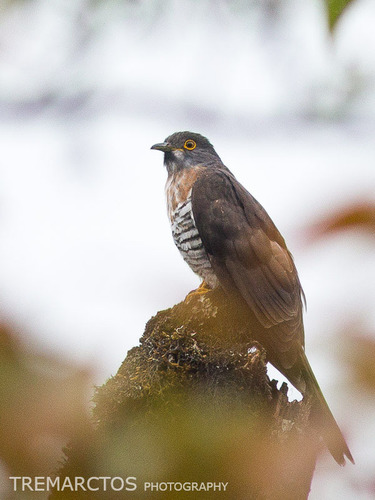
Large Hawk-Cuckoo
Hierococcyx sparverioides
A remarkable mimic with a hawk-like silhouette, the Large Hawk-Cuckoo is the forest's most elusive 'brain-fever' singer. This large, vocal bird is famous for its clever brood-parasitic lifestyle and its ability to blend perfectly into the Asian canopy.
Quick Identification
Size
38-40 cm (15-16 in) in length; wingspan approximately 65-75 cm (25-29 in); weight 110-150g (3.8-5.3 oz)
Colors
Greyish-brown upperparts, white underparts with heavy rufous and brown barring, yellow eye-ring, and a distinctive black patch on the chin.
Key Features
- Distinctive black patch on the chin and throat
- Yellow eye-ring and cere
- Hawk-like profile with rounded wings and long banded tail
- Heavily barred underparts resembling a bird of prey
When You’ll See Them
Geographic range
Where Does the Large Hawk-Cuckoo Live?
The Large Hawk-Cuckoo is native to the Asian continent, boasting a massive breeding range that extends from the lower Himalayas through southern China and into Taiwan. During the winter months, populations from the northern temperate zones migrate south to find warmth in the tropical forests of Southeast Asia, including Thailand, Malaysia, and the Philippines. Because it thrives in varied altitudes, it is just as likely to be found in mountain ridge forests as it is in lush, wooded river valleys.
Basemap © OpenStreetMap contributors
Behavior
The Large Hawk-Cuckoo is a master of mimicry, evolving to look almost identical to the Shikra or other Accipiter hawks. This resemblance is a clever survival strategy; by mimicking a predator, they can frighten other birds off their nests, allowing the cuckoo to sneak in and lay its own egg. They are primarily solitary and notoriously shy, often remaining hidden within the thick foliage of the high canopy.
Known for their vocal persistence, males will sit on a high branch and repeat their loud, piercing call for hours on end during the breeding season. Unlike some of their relatives, their call remains at a relatively steady pitch rather than rising in a frantic crescendo. They are brood parasites, meaning they do not raise their own young but instead rely on host species like laughing-thrushes and babblers to act as unwitting foster parents.
EverydayEarth exclusive
Camera Tips
To capture the Large Hawk-Cuckoo on a trail camera, you need to think vertically. These birds rarely descend to the ground, so mounting your camera on a high branch or overlooking a ravine can be very effective. Look for 'song posts'—prominent, often dead branches that stick out from the canopy where a male might return daily to announce his territory.
Because they do not visit traditional seed or suet feeders, the best way to attract them to a camera's field of view is through water. A birdbath with a solar-powered fountain or a simple 'dripper' setup is highly effective. The sound of moving water is a magnet for cuckoos, and they will often descend from the safety of the heights for a quick drink or a vigorous bath during the heat of the afternoon.
Set your camera to a fast trigger speed and use burst mode. Because of their hawk-like flight, they move with sudden, rapid bursts of speed. Capturing a series of photos increases your chances of getting a clear shot of the identifying black chin patch or the yellow eye-ring. High-resolution video (4K if available) is particularly useful for distinguishing them from the smaller Common Hawk-Cuckoo.
If you live in an area with laughing-thrushes or babblers, place your camera near their nesting sites during the spring. The Large Hawk-Cuckoo will actively scout these areas, flying low through the understory to monitor the progress of potential host nests. Using a wide-angle lens in these dense thickets can help capture the bird as it navigates the shadows.
Similar Species
Species that look similar or are commonly confused with Large Hawk-Cuckoo.
Frequently Asked Questions
Record Large Hawk-Cuckoo at your habitat
Connect a camera to start building your own species record — AI identifies every visitor automatically.