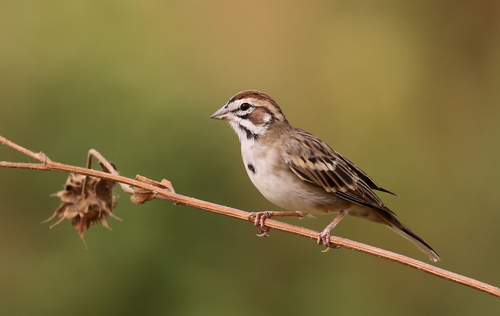
Lark Sparrow
Chondestes grammacus
With its bold harlequin face and melodic song, the Lark Sparrow is a standout among North American grassland birds. Often seen strutting across open ground, this elegant sparrow brings a touch of the wild prairie to backyard cameras.
Quick Identification
Size
Length: 15–17 cm (5.9–6.7 in); Wingspan: 28 cm (11 in); Weight: 24–33 g (0.8–1.2 oz)
Colors
Bold harlequin head pattern with chestnut, white, and black; grayish-brown streaked back; white underparts with a single dark central breast spot.
Key Features
- Chestnut crown and cheek patches with white stripes
- Single dark spot in the center of a white breast
- White outer tail feathers visible when fanning or in flight
When You’ll See Them
Geographic range
Where Does the Lark Sparrow Live?
The Lark Sparrow is a true North American native, found predominantly across the central and western regions of the continent. Its breeding range stretches from southern Canada down through the Great Plains and the American West, while wintering populations migrate to the southern United States and throughout Mexico. These hardy sparrows are especially common in the interior 'breadbasket' regions, where the mix of open fields and scattered woody cover provides the perfect balance for their nesting and foraging needs.
Basemap © OpenStreetMap contributors
Behavior
These birds are generally social and can be found in small flocks during the non-breeding season, often mixing with other sparrow species. While they are not overly shy around humans, they prefer open spaces to dense thickets, making them a common sight along roadside fences and in rural gardens. Their song is a beautiful, melodic series of trills and whistles, often including buzzy notes that are distinct from other grassland birds.
EverydayEarth exclusive
Camera Tips
Attracting them to a specific spot for your camera is relatively easy with the right bait. High-quality birdseed mixes containing millet, cracked corn, or sunflower hearts spread directly on the ground will draw them in far better than a hanging feeder. They are particularly fond of open, sandy areas, so if your backyard has a natural clearing, that is the prime spot for your setup.
If you have a birdbath, consider placing the camera nearby; Lark Sparrows are frequent bathers and prefer shallow, ground-level water sources with a bit of movement to the water. A solar-powered dripper can act as a great lure. Since Lark Sparrows are often found in open areas, wind can be a factor for motion sensors. Secure your camera firmly to a heavy stake or a low fence post to prevent false triggers from moving tall grasses.
During the spring, look for males performing their ground-strutting displays. If you notice a male frequently visiting a specific patch of dirt, keep your camera there. Use a fast shutter speed or high-frame-rate video setting to capture the intricate details of their chestnut facial patterns and the white tips of their tail feathers, which can appear blurred in standard settings during fast movement.
Similar Species
Species that look similar or are commonly confused with Lark Sparrow.
Vesper Sparrow
Smaller and lacks the bold chestnut head pattern, but shares the white outer tail feathers.
Harris's Sparrow
Much larger with a solid black crown and bib rather than the harlequin facial stripes.
Chipping Sparrow
Smaller with a solid rufous cap and a prominent black line through the eye, lacking the Lark's white tail edges.
Frequently Asked Questions
Record Lark Sparrow at your habitat
Connect a camera to start building your own species record — AI identifies every visitor automatically.