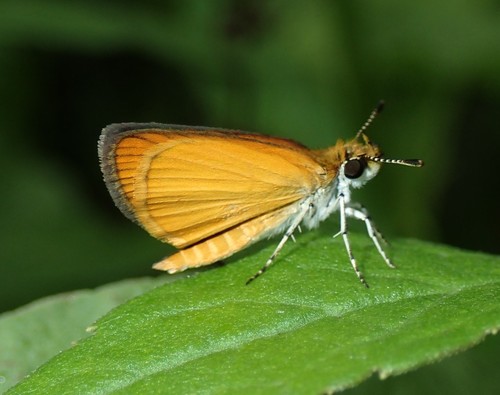
Least Skipper
Ancyloxypha numitor
The Least Skipper is a tiny, golden treasure that dances through the tall grass. With its rhythmic, bobbing flight and vibrant orange wings, it is a delightful discovery for any backyard observer.
Quick Identification
Size
Wingspan of 0.75 to 1.0 inches (19 to 25 mm)
Colors
Upperside forewings are dark blackish-brown with an orange wash; hindwings are bright orange with a wide black border. The underside of the hindwing is a uniform, pale orange-yellow.
Key Features
- Extremely small size, often the smallest skipper in North America
- Weak, bobbing flight pattern low to the ground
- Orange hindwings with a distinct dark border on the upper side
- Slender, delicate body compared to other robust skipper species
When You’ll See Them
Behavior
The Least Skipper is a unique member of the Hesperiidae family because it lacks the powerful, darting flight typical of most skippers. Instead, it possesses a weak, rhythmic, and bouncing flight pattern that stays very low—often just inches above the ground. They spend much of their time weaving through tall grasses and sedges, making them appear almost like tiny glowing embers dancing in the undergrowth.
These butterflies are relatively sedentary and do not migrate. They are most active during the warmer parts of the day but prefer the shelter of tall vegetation to avoid high winds. They are often seen perched on grass blades with their wings held in a 'jet-plane' position, a characteristic pose for skippers where the forewings and hindwings are held at different angles.
EverydayEarth exclusive
Camera Tips
Capturing the Least Skipper on an AI-powered camera requires a specific 'micro-habitat' setup. Because these butterflies rarely fly higher than two feet, your camera must be mounted very low to the ground. Use a ground stake or a low-profile tripod to position the lens between 6 and 15 inches high. Aim the camera at a cluster of White Clover or a damp patch of earth near a lawn edge, as they are frequently drawn to these spots for nectar and moisture.
To get the best results from your AI detection, place the camera in a location protected from the wind. Because the Least Skipper has a weak flight, it will seek out the calmest corners of your yard. If your camera has a macro lens or a close-focus setting, use it. Set the focus distance to approximately 1-2 feet and place a 'perch'—like a tall blade of native grass or a slender stick—directly in the frame. The butterflies will often use these as landing pads between short flights.
Timing and lighting are essential for high-quality butterfly photography. Set your camera to record during the brightest hours of the day when the orange on their wings will pop against the green grass. Avoid placing the camera in deep shade, as the motion sensors might struggle to trigger for such a small, lightweight subject. If your camera settings allow, increase the sensitivity of the motion trigger to 'High' to ensure the delicate movement of a skipper is captured.
Consider creating a 'no-mow' zone in your backyard to attract them. By leaving a 5x5 foot patch of grass to grow tall, you create a natural stage for the Least Skipper. Position your camera on the edge of this patch, facing inward toward the sunny side. This provides the ideal backdrop and increases the likelihood of capturing their unique 'bobbing' flight behavior on video.
Similar Species
Species that look similar or are commonly confused with Least Skipper.
Frequently Asked Questions
Record Least Skipper at your habitat
Connect a camera to start building your own species record — AI identifies every visitor automatically.