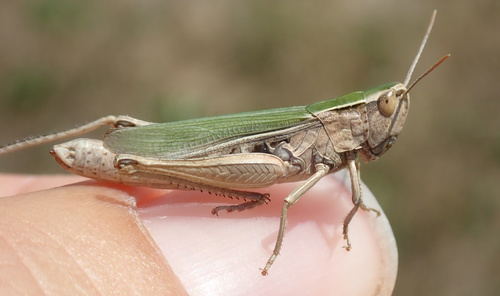
Lesser Marsh Grasshopper
Chorthippus albomarginatus
A slender and adaptable resident of Europe's meadows, the Lesser Marsh Grasshopper is a master of camouflage. Famous for its rhythmic summer song, it can be found basking in both damp marshes and sun-drenched coastal dunes.
Quick Identification
Size
Length: Males 13–15 mm (0.5–0.6 in), Females 18–21 mm (0.7–0.8 in)
Colors
Variable mix of green, straw-brown, or grey; females often feature a distinct white or pale cream longitudinal stripe along the lower edge of the forewing.
Key Features
- Nearly straight side-carinae (ridges) on the pronotum
- Long forewings reaching or exceeding the tip of the abdomen
- Slender, streamlined body profile
- Quiet, rhythmic song consisting of short chirps lasting 1-2 seconds
When You’ll See Them
Behavior
The Lesser Marsh Grasshopper is a sun-seeking insect that thrives in varied grassland environments. It is remarkably adaptable, often found in damp, marshy areas as well as dry coastal dunes. Much of its daily behavior revolves around thermoregulation; you will frequently find them basking on sun-exposed blades of grass or flat stones during the morning hours to reach the internal temperature required for activity.
Males are highly vocal during the summer, producing a rhythmic "stridulation" by rubbing their hind legs against their wings to attract females. Though they are capable of short, fluttery flights when disturbed, their primary defense is a powerful jump followed by a quick crawl into thick vegetation. They are generally solitary but can appear in high densities where the habitat is favorable, such as unmown meadows or coastal verges.
EverydayEarth exclusive
Camera Tips
To capture the Lesser Marsh Grasshopper on camera, you must think small and low. Because these insects rarely rise more than a few inches above the ground, your camera should be mounted at "grass-level." A ground-stakes mount or a low-profile tripod is essential. Aim your lens at a specific feature, such as a prominent, sun-drenched stalk of grass or a flat stone, which these grasshoppers often use as basking platforms to warm up in the morning sun.
Standard trail cameras can struggle with subjects this small. If your camera has a macro mode or a close-focus lens (within 1-2 feet), use it. For motion detection, set your sensor to the highest possible sensitivity. However, since the small body mass of a grasshopper may not always trigger a PIR sensor, the most successful method is often using a "time-lapse" setting, taking a photo every 1 to 5 minutes during the peak sunny hours of 10 AM to 4 PM.
Lighting is critical for making the subject pop against the green background. Position your camera so the sun is behind it or slightly to the side to highlight the grasshopper’s texture and that characteristic white wing stripe. Avoid placing cameras in very windy spots; excessive movement of the grass will not only create hundreds of false triggers but will also make it difficult for the camera to maintain focus on the insect. A "staged" area with a few hand-cleared stalks around a central, attractive perch can create a professional-looking wildlife shot in your own backyard.
Similar Species
Species that look similar or are commonly confused with Lesser Marsh Grasshopper.
Frequently Asked Questions
Record Lesser Marsh Grasshopper at your habitat
Connect a camera to start building your own species record — AI identifies every visitor automatically.