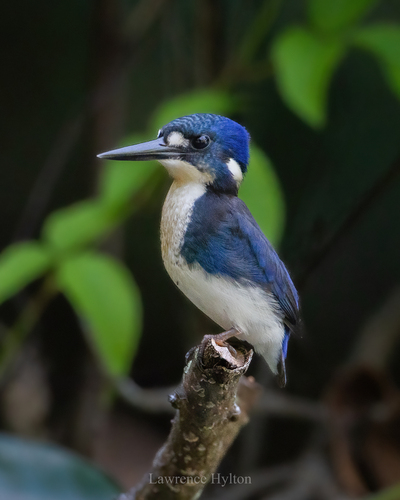
Little Kingfisher
Ceyx pusillus
The Little Kingfisher is a tiny, living jewel of the northern mangroves. Though barely larger than a thumb, its brilliant cobalt and white plumage makes it one of the most stunning sights for backyard explorers in tropical regions.
Quick Identification
Size
Length: 11–13 cm (4.3–5.1 in); Wingspan: approx. 19 cm (7.5 in); Weight: 10–15 g (0.35–0.53 oz)
Colors
Glossy cobalt blue upperparts, snowy white underparts, white neck patches, and a jet-black bill. Sexes are similar, though females may be slightly larger.
Key Features
- Extremely small size, much smaller than most other kingfishers
- Deep glossy blue crown, back, and wings
- Pure white underparts from throat to tail
- Distinct white 'spot' in front of the eyes and on the side of the neck
When You’ll See Them
Geographic range
Where Does the Little Kingfisher Live?
Native to the tropical regions of Oceania and Southeast Asia, the Little Kingfisher is found in a lush arc stretching from the Moluccas and New Guinea through the Solomon Islands. In Australia, they are a sought-after sight along the northern coastline, specifically ranging from the Kimberley region across the Top End to the tropical lowlands of North Queensland. They are strictly lowland birds, rarely wandering far from the coast or major river systems.
Basemap © OpenStreetMap contributors
Behavior
The Little Kingfisher is a shy and remarkably fast-moving bird, often described as a blue-and-white blur as it zips low over the water's surface. Unlike some of its louder cousins, this species is relatively quiet, though it emits a high-pitched, thin 'teet-teet' call when disturbed. They are typically solitary hunters, spending long periods perched motionless on low-hanging branches or mangrove roots just inches above the water.
When a prey item is spotted, they dive with incredible precision, snatching small fish or insects from just below the surface before returning to their perch. In terms of social interaction, they are highly territorial of their feeding patches. While they generally avoid human contact, they can become accustomed to quiet observers in kayaks or on boardwalks within their mangrove habitats.
EverydayEarth exclusive
Camera Tips
Capturing the Little Kingfisher on camera requires patience and strategic placement due to their tiny size and lightning-fast flight. To increase your chances, position your AI-powered camera near a narrow, slow-moving creek or a shaded mangrove inlet. Look for 'regular' perches—often a thin, horizontal branch or a protruding root about 30 to 60 centimeters (1–2 feet) above the water. These birds are creatures of habit and will often return to the exact same twig to scan for fish.
Because they are so small, you need to set your camera closer than you would for a larger kookaburra or heron. A distance of 2 to 3 meters is ideal, but ensure the camera is well-camouflaged with leaf litter or mesh to avoid spooking them. Use a high-speed trigger setting if available, as their dive and return to the perch happen in a matter of seconds. Since they live in deep shade, a camera with high-quality low-light sensors is essential to avoid grainy blue blurs.
While you cannot easily 'bait' a kingfisher with seed, maintaining a healthy, chemical-free backyard pond or water feature near a natural waterway may attract the small fish and insects they hunt. If you have a backyard bordering a canal or creek, planting dense native vegetation like mangroves or tea-trees provides the necessary cover they require to feel safe enough to visit your camera's field of view.
Similar Species
Species that look similar or are commonly confused with Little Kingfisher.
Frequently Asked Questions
Record Little Kingfisher at your habitat
Connect a camera to start building your own species record — AI identifies every visitor automatically.