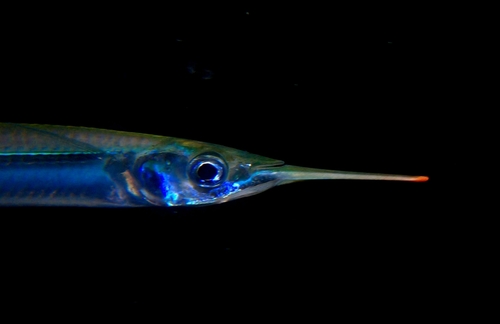
Longfin Halfbeak
Hemiramphus saltator
A master of the ocean's surface, the Longfin Halfbeak is famous for its spear-like jaw and its ability to skip across the waves. These silvery sentinels are a common sight for coastal residents from California to Peru.
Quick Identification
Size
Typically 30 to 45 cm (12 to 18 inches) in length; weighing up to 0.9 kg (2 lbs)
Colors
Brilliant metallic blue or dark greenish-blue on the back, fading to bright silvery-white sides and belly
Key Features
- Distinctly elongated lower jaw resembling a beak
- Extremely long pectoral fins that can reach past the dorsal fin
- Slender, streamlined body built for surface speed
- Large, silvery scales that reflect sunlight
When You’ll See Them
Geographic range
Where Does the Longfin Halfbeak Live?
Native to the Eastern Pacific Ocean, the Longfin Halfbeak is a true coastal wanderer of the Americas. Its core range extends from the temperate waters of Southern California down through the tropical coastlines of Mexico and Central America, reaching as far south as northern Peru and including the Galápagos Islands. While they are most abundant in the warm tropical waters of the Panamic province, they occasionally drift into cooler northern latitudes during strong El Niño events.
Basemap © OpenStreetMap contributors
Behavior
One of their most striking behaviors is their escape mechanism; when threatened, they use their powerful tails to launch themselves out of the water, skittering across the surface for several meters to confuse predators. While they are primarily an offshore species, they frequently enter bays and lagoons, making them a fascinating subject for waterfront observers and those with dock-mounted cameras.
EverydayEarth exclusive
Camera Tips
Capturing the Longfin Halfbeak requires a specialized approach since they are almost exclusively surface-dwellers. If you have a backyard dock or a seawall, the best setup is a downward-facing camera mounted roughly 3 to 5 feet above the water line. Because these fish are highly reflective, use a circular polarizing filter on your lens to cut through the water's surface glare, which allows the AI to better recognize the distinct 'halfbeak' silhouette against the dark water.
To attract these fish to your camera's field of view, look for areas with natural light concentration, such as near a dock light at night or a sunny patch of water during the day. While they are generally wary, they are attracted to floating organic debris where their prey hides. You can encourage them to linger by using a 'chum' of finely ground fish meal or by letting small amounts of floating fish pellets drift into the frame. Keep the camera settings on a high shutter speed (1/500s or faster) to freeze the motion of their rapid surface skips.
For the most dramatic shots, consider an underwater action camera mounted just an inch below the surface facing horizontally toward the open water. This 'snorkel-view' perspective highlights the incredible length of their lower jaw and the iridescent blues of their scales. Since they are most active during bright, sunny days, avoid recording during heavy chop or rainy weather, as the surface distortion makes it difficult for AI models to trigger and identify the species accurately.
Similar Species
Species that look similar or are commonly confused with Longfin Halfbeak.
Frequently Asked Questions
Record Longfin Halfbeak at your habitat
Connect a camera to start building your own species record — AI identifies every visitor automatically.