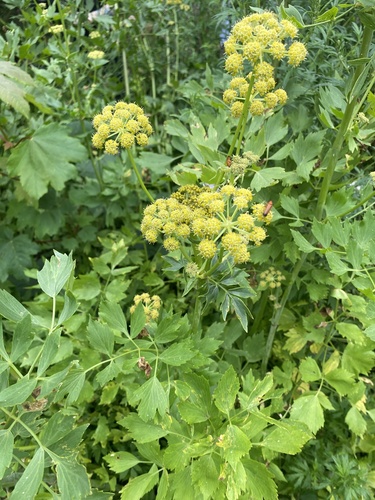
Lovage
Levisticum officinale
A towering herb with a savory soul, Lovage is a striking perennial that doubles as a skyscraper for beneficial backyard insects.
Quick Identification
Size
Height of 1.8–2.5 meters (6–8 feet) with a spread of 60–90 cm (24–36 inches)
Colors
Glossy, dark green foliage with tiny greenish-yellow flower clusters
Key Features
- Tall, hollow, ribbed stems similar to celery
- Large, flat, compound leaves with toothed leaflets
- Small yellow flowers arranged in globe-like umbels
- Intense, savory fragrance reminiscent of celery and parsley
When You’ll See Them
Behavior
Lovage is a vigorous perennial herb that functions as an anchor in the backyard ecosystem. While it doesn't move like an animal, its 'behavior' is defined by a rapid spring growth spurt, where it can reach its full height in just a few months. It is a social plant in the sense that it acts as a magnet for biodiversity, providing structural complexity for small garden visitors.
As the plant matures in mid-to-late summer, it produces large flowering heads (umbels) that are a major nectar source. Because it is a long-lived perennial, it often becomes a permanent landmark for local wildlife, which return to it year after year for food and shelter. In the winter, the plant dies back completely to the ground, only to emerge early the following spring.
EverydayEarth exclusive
Camera Tips
Capturing the beauty of Lovage with an AI camera is most rewarding when you focus on its role as a pollinator hub. To get the best shots, mount your camera on a garden stake approximately 4 to 5 feet high, angled slightly downward toward the flowering umbels. Since Lovage can grow quite tall, you may need to adjust the height as the season progresses to keep the flower heads in the frame.
Because Lovage attracts a high volume of beneficial insects like hoverflies, predatory wasps, and bees, set your camera to a high-speed trigger mode or 'Burst' setting. This ensures you catch the fast-moving wings of the insects as they land. If your AI camera has a macro or close-focus capability, placement within 12-18 inches of a blooming flower head will yield stunning detail of the intricate yellow florets and their visitors.
For a unique perspective, consider setting up a long-term timelapse. Lovage's growth is incredibly fast in late spring; a photo taken every hour during daylight can create a fascinating video of the 'celery-on-steroids' shooting upward. Ensure the camera is positioned to the south of the plant so the sun is behind the lens, highlighting the glossy texture of the leaves without causing harsh silhouettes.
Don't ignore the base of the plant! The large, dense foliage near the ground creates a cool, moist microclimate. Placing a camera low to the ground near the stems can capture ground beetles, toads, or small mammals seeking shade during the heat of the day. If you are looking to trigger the AI on specific insects, early afternoon is the prime time when nectar production is at its peak.
Similar Species
Species that look similar or are commonly confused with Lovage.
Frequently Asked Questions
Record Lovage at your habitat
Connect a camera to start building your own species record — AI identifies every visitor automatically.