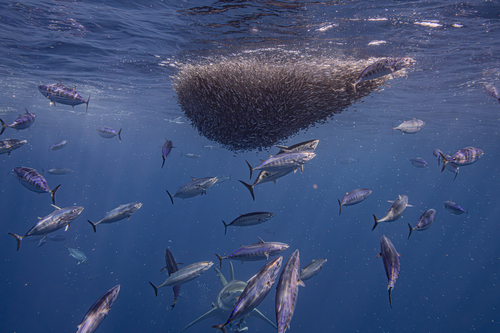
Mackerel Tuna
Euthynnus affinis
The Mackerel Tuna is the ultimate coastal speedster, flashing through the Indo-Pacific with striking wavy patterns and incredible power. A master of the open blue, this 'little tuna' brings the thrill of the ocean right to the coastline.
Quick Identification
Size
Typically 50–60 cm (20–24 in) in length, but can reach up to 100 cm (39 in). Weights generally range from 2–6 kg (4.4–13.2 lbs) but can reach 14 kg (31 lbs).
Colors
Metallic blue-green on the upper back with a pattern of dark, wavy stripes; the lower sides and belly are silvery-white. Distinctive dark spots (usually 1 to 5) are found between the pectoral and pelvic fins.
Key Features
- Distinctive wavy black stripes on the upper back above the lateral line
- 1-5 dark spots between the pectoral and pelvic fins
- Streamlined, torpedo-shaped body with a deeply forked tail
- Series of 6-8 small finlets behind the dorsal and anal fins
When You’ll See Them
Geographic range
Where Does the Mackerel Tuna Live?
The Mackerel Tuna is a wide-ranging resident of the Indo-West Pacific region. Its native range extends from the Red Sea and East Africa across the Indian Ocean to the coastal waters of Southeast Asia and the northern half of Australia. It is frequently found as far north as Japan and throughout the central Pacific islands, including Hawaii, flourishing in tropical and subtropical maritime environments.
Basemap © OpenStreetMap contributors
Behavior
The Mackerel Tuna, also widely known as the Kawakawa, is an incredibly fast and powerful swimmer. They are highly social and are almost always found in schools, which can range from a few dozen to several thousand individuals. These schools are often mixed with other species like Skipjack Tuna or Small Yellowfin, creating a massive, nomadic hunting unit that patrols coastal waters.
Because they are 'ram ventilators,' Mackerel Tuna must stay in constant motion to keep oxygen-rich water flowing over their gills. This means they are perpetual wanderers, never resting. They are known for their high metabolism and aggressive feeding behavior, often driving schools of baitfish to the surface in a spectacular 'boil' that attracts predatory birds from miles around.
EverydayEarth exclusive
Camera Tips
Capturing the Mackerel Tuna on camera requires an underwater setup, as they rarely stray from the marine environment. For those with 'backyards' on the water, such as a private pier or dock, an underwater action camera (like a GoPro or Insta360) is the best tool. Mount the camera on a weighted PVC pipe or a submerged tether about 1.5 to 3 meters below the surface. Aim the lens outward toward the current, as tuna often swim against the flow while looking for food.
Since Mackerel Tuna are visual hunters attracted to flash and movement, you can lure them into frame by using a 'teaser.' A shiny, hookless silver lure or even a string of old CDs suspended in the current near the camera can mimic the flash of a baitfish school, enticing a curious tuna to investigate. For the best clarity, ensure your camera is set to a high frame rate (60fps or 120fps) to catch their lightning-fast movements without blur.
Lighting is crucial for marine photography. The best time to record is between 10 AM and 2 PM when the sun is highest, providing maximum penetration into the water column to showcase the tuna's iridescent blue and silver colors. If you are filming from above the water on a boat or pier, use a circular polarizing filter to remove surface glare. Look for diving sea birds or 'ripples' on the surface to know when a school is nearby, and keep your shutter speed at 1/1000s or higher to freeze the action.
Similar Species
Species that look similar or are commonly confused with Mackerel Tuna.
Frequently Asked Questions
Record Mackerel Tuna at your habitat
Connect a camera to start building your own species record — AI identifies every visitor automatically.