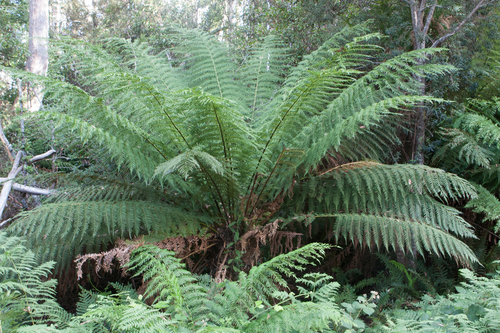
man fern
Dicksonia antarctica
A living relic from the age of dinosaurs, the Man Fern transforms any damp corner into a lush, prehistoric sanctuary with its towering fronds and iconic velvet trunk.
Quick Identification
Size
Trunks can grow up to 15m (50ft) tall, with arching fronds 2-4m (6.5-13ft) in length.
Colors
Lush emerald-green fronds; the thick, fibrous trunk is deep reddish-brown and covered in soft, velvety hairs.
Key Features
- Thick, fibrous trunk formed by decayed leaf bases and roots
- Vibrant green fronds that form a spreading canopy
- New growth emerges as fuzzy, coiled 'fiddleheads'
- Mature fronds feature brown spore cases (sori) on their underside
When You’ll See Them
Behavior
The Man Fern, also known as the soft tree fern, is a slow-growing ancient species that adds a prehistoric feel to any environment. Growing at a rate of only 3.5 to 5 centimeters per year, these long-lived giants can survive for centuries. Unlike many plants, they are particularly resilient to being moved; because the trunk is essentially a mass of aerial roots, they can survive being cut at the base and replanted if kept sufficiently moist.
In the wild, the Man Fern plays a vital role in its ecosystem. Its fibrous trunk acts as a host for many other organisms, including mosses, liverworts, and smaller epiphytic ferns that grow directly on its 'bark.' For backyard enthusiasts, this fern provides essential shade and high-humidity microclimates that attract a variety of moisture-loving insects and amphibians.
EverydayEarth exclusive
Camera Tips
Capturing the beauty of a Man Fern on a trail camera requires a different approach than filming moving wildlife. The most rewarding project is a long-term time-lapse of the 'fiddleheads' uncurling. Set your camera to a time-lapse mode, taking one photo every 4 to 6 hours during the spring growth spurt. Secure the camera to a nearby post or tree, angled slightly downward toward the crown (the center of the fern) to capture the spectacular spiral expansion of the new fronds.
Because Man Ferns thrive in dark, damp spots, lighting is your biggest challenge. Avoid using a harsh direct flash, which can wash out the deep greens of the fronds. Instead, position your camera to take advantage of 'god rays'—those shafts of light that pierce the canopy in the early morning. If your camera has adjustable exposure settings, bumping the exposure up slightly can help reveal the intricate textures of the fibrous brown trunk.
Don't just point the camera at the plant; look for the visitors it attracts. Position a camera about 3-4 feet from the trunk at a 45-degree angle to catch birds like the Eastern Yellow Robin or various honeyeaters that often land on the trunk to forage for insects hiding in the fibers. In suburban settings, you might even catch a Ringtail Possum using the dense canopy as a daytime sleeping spot.
Lastly, ensure your camera is well-weatherproofed. Man Ferns require high humidity and frequent watering, so your equipment will be exposed to constant moisture. Use a desiccant pack inside the camera housing to prevent lens fogging, which is common in the damp microclimates where these ferns flourish.
Similar Species
Species that look similar or are commonly confused with man fern.
Frequently Asked Questions
Record man fern at your habitat
Connect a camera to start building your own species record — AI identifies every visitor automatically.