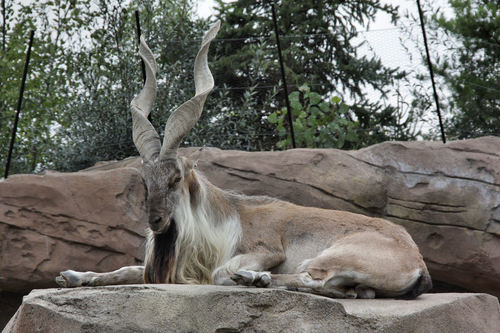
Markhor
Capra falconeri
With its spectacular corkscrew horns and gravity-defying climbing skills, the markhor is the undisputed monarch of the Asian mountains. Discover how to spot this elusive climber using smart trail camera technology.
Quick Identification
Size
Height: 65–115 cm (26–45 in); Weight: 32–110 kg (71–243 lb); Horn length: up to 160 cm (63 in)
Colors
Tan to reddish-brown in summer, fading to gray in winter. Males have a prominent white neck ruff and a long black beard.
Key Features
- Massive spiral horns that resemble a corkscrew
- Long, shaggy beard and neck ruff in males
- Dark and white 'stocking' markings on the legs
- Sturdy, muscular build suited for steep rock climbing
When You’ll See Them
Geographic range
Where Does the Markhor Live?
Native to the rugged mountain ranges of Central and South Asia, the markhor is most famously found in the craggy peaks of the Karakoram and the Himalayas. Its core populations are concentrated in northern Pakistan, eastern Afghanistan, and parts of Tajikistan and Uzbekistan, with small, isolated groups also persisting in Jammu and Kashmir, India. Unlike many other ungulates, the markhor has not been widely introduced outside its native range, remaining a true specialist of the high-altitude scrub forests and steep cliffs of its ancestral home.
Basemap © OpenStreetMap contributors
Behavior
The markhor is an incredibly agile mountain goat, often found navigating dizzying heights on sheer rock faces. They are social animals, with females and young forming herds of around 8 to 10 individuals, while adult males remain largely solitary outside of the breeding season. During the rut, males engage in dramatic displays of strength, using their spectacular spiral horns to lock and push opponents in a test of dominance.
These animals are primarily crepuscular, meaning they are most active during the early morning and late afternoon. They spend their days resting in shaded rocky outcrops to avoid predators and the heat. Markhor are known for their wariness; they possess keen eyesight and a sharp sense of smell, making them one of the more elusive targets for wildlife observers and camera traps alike.
EverydayEarth exclusive
Camera Tips
To capture the markhor on camera, you must focus on 'high-traffic' terrain transitions. These goats are masters of the vertical world, so place your camera at the intersection of steep rocky cliffs and the scrubby forests where they feed. Look for narrow mountain passes or established game trails near water sources in arid regions. Positioning the camera at a slight downward angle from a higher rock ledge can provide a dramatic perspective of their massive horns and shaggy ruffs without being easily spotted by their sharp upward-looking eyes.
Since markhor are extremely wary, scent control is vital. Avoid visiting the camera site frequently and use a camera with a high-speed trigger (0.3 seconds or less) to catch them as they move quickly across open patches. Because they are most active during the 'golden hours' of dawn and dusk, ensure your camera has excellent low-light performance or a high-quality black-glow infrared flash that won't startle them in the dim light of the ravines.
In terms of timing, the late autumn and early winter (November to January) are peak seasons for activity due to the rut. During this time, males are more mobile and less cautious as they seek out female herds. If you are deploying cameras in a region where they visit lower elevations, focus on ridge lines where they prefer to travel to scan for predators. In these areas, avoid using bright white flashes, as the markhor's flight response is highly tuned to unusual visual stimuli.
Similar Species
Species that look similar or are commonly confused with Markhor.
Frequently Asked Questions
Record Markhor at your habitat
Connect a camera to start building your own species record — AI identifies every visitor automatically.