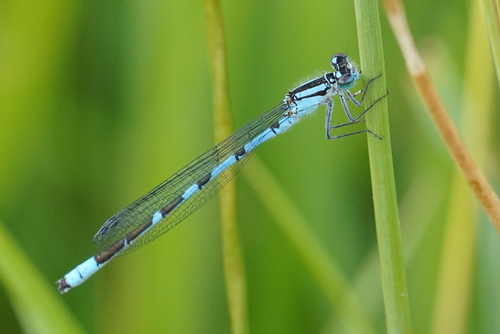
Marsh Bluet
Enallagma ebrium
A jewel of the wetlands, the Marsh Bluet brings a flash of brilliant sky-blue to backyard ponds. This delicate damselfly is a master of the reeds, offering a fascinating glimpse into the vibrant micro-world of summer insects.
Quick Identification
Size
Length: 26–33 mm (1.0–1.3 inches); Wingspan: 35–40 mm (1.4–1.6 inches)
Colors
Males are vibrant sky-blue with black bands and spade-shaped markings; females are dimorphic, appearing either pale green/tan or a duller blue.
Key Features
- Bright blue abdomen with a black spade-shaped spot on segment 2
- Segments 8 and 9 are entirely blue with no black markings
- Small circular blue eyespots behind the head
- Extremely slender, needle-like body held horizontally when at rest
When You’ll See Them
Behavior
The Marsh Bluet is a social and active damselfly frequently seen hovering just inches above the water's surface or perched on aquatic grasses. Unlike some more aggressive dragonflies, these delicate insects spend much of their time navigating through dense vegetation in search of tiny prey or suitable mates. They are known as "gleaners," often picking small insects right off of leaves rather than engaging in high-speed mid-air chases.
During the mating season, you will often spot them flying "in tandem," where the male uses the appendages at the end of his abdomen to clasp the female behind her head. Together, they move through the marshy edges of ponds, with the female dipping her abdomen into the water or into plant stems to lay eggs. They are entirely harmless to humans and are excellent natural pest controllers, keeping gnat and mosquito populations in check around garden ponds.
EverydayEarth exclusive
Camera Tips
Capturing the Marsh Bluet requires a different approach than filming birds or mammals. Since these insects are small and prefer staying near water, place your camera on a tripod or a low mount at "frog-eye level"—roughly 6 to 12 inches above the water's surface or the ground. Focus on a specific "perch," such as a single stalk of pickerelweed or a tall blade of grass that stands out from the rest. Bluets are creatures of habit and will often return to the exact same sun-drenched leaf after a short flight, making them predictable subjects for a stationary lens.
Lighting is your best friend when filming damselflies. Their iridescent blue bodies truly pop under direct sunlight, but harsh midday sun can sometimes wash out the finer details of their markings. For the best results, aim for the "golden hours" of late morning (10 AM to 12 PM) when the sun is bright enough to trigger their activity but soft enough to highlight the intricate black patterns on their abdomen. If your camera allows for manual settings, ensure you have a high shutter speed or a high frame rate (at least 60fps) to capture the delicate flutter of their four independent wings without excessive motion blur.
Because they are cold-blooded, Marsh Bluets are most active on calm, windless days. If your backyard camera has a macro lens or a close-focusing feature, use it to get within the 1-2 foot range. While you cannot "bait" them with food like a bird, you can attract them to a specific camera zone by creating a "perching highway." Simply place a few thin bamboo stakes or tall, vertical grasses in a sunny spot near your water feature. Avoid using wind chimes or moving decorations nearby, as the sudden vibrations and movement can spook these sensitive fliers away from your camera's field of view.
Similar Species
Species that look similar or are commonly confused with Marsh Bluet.
Familiar Bluet
The black spot on the second abdominal segment is larger and more rounded, rather than spade-shaped.
Northern Bluet
The black bands on the middle segments of the abdomen are significantly wider and more rectangular.
Boreal Bluet
Nearly identical visually; requires a macro lens to see the slightly different shape of the male's tail appendages.
Frequently Asked Questions
Record Marsh Bluet at your habitat
Connect a camera to start building your own species record — AI identifies every visitor automatically.