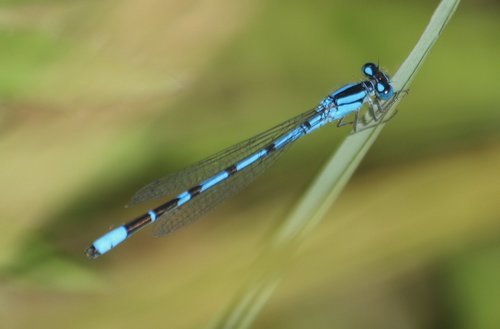
Northern Bluet
Enallagma annexum
A masterpiece of biological engineering in miniature, the Northern Bluet dazzles with its electric blue segments and delicate flight. These common but stunning damselflies are the vibrant sentinels of North American wetlands.
Quick Identification
Size
26–38 mm (1.0–1.5 inches) in length; wingspan approximately 35–45 mm (1.4–1.8 inches)
Colors
Males are vibrant sky-blue with black bands and a mushroom-shaped spot; females are dimorphic, appearing either pale blue or olive-tan with heavy black markings
Key Features
- Large blue post-ocular spots on the head
- Mushroom-shaped black spot on the second abdominal segment (males)
- Wings held together vertically or slightly tilted over the back when resting
- Bright blue and black ringed abdomen
When You’ll See Them
Behavior
Northern Bluets are quintessential 'pond damselflies,' known for their low, fluttering flight patterns over the surface of still water. Unlike their dragonfly cousins, they are relatively dainty flyers, preferring to spend much of their time perched on emergent vegetation like reeds or lily pads. They are highly territorial during the breeding season, with males patrolling small stretches of shoreline to ward off rivals and wait for receptive females.
When hunting, they use their large compound eyes to spot tiny movements in the air, darting out to snatch gnats and mosquitoes mid-flight. They are also known for 'gleaning,' or picking small insects directly off leaves. To humans, they are harmless and often quite curious, sometimes landing on a quiet observer's hand or fishing rod if it provides a sunny vantage point. At night or during rain, they retreat into tall grasses surrounding the water to find shelter.
EverydayEarth exclusive
Camera Tips
Capturing high-quality images of Northern Bluets requires focusing on their 'launch pads.' These damselflies are creatures of habit and will often return to the exact same reed or twig after a hunting flight. Position your camera on a tripod at a low angle, roughly 12 to 24 inches above the water level, aimed at a prominent piece of vegetation that stands out from the rest. Because they are small, use a macro setting or a lens with a short minimum focus distance to ensure the AI can lock onto the blue coloration.
Lighting is your best friend when photographing Odonata. Try to position your camera so the sun is behind you or at a 45-degree angle to the side. This illuminates the brilliant blue segments of the male and the intricate, lace-like venation of the wings. If you are using a trail camera, look for models with a 'Close-Up' or 'Macro' lens attachment, as standard trail cams often have a fixed focus starting at 5 feet, which is too far for a 1-inch insect. Set your trigger speed to the fastest possible setting, or better yet, use a high-frame-rate video mode to capture their delicate take-offs.
If you don't have a natural pond, you can attract them to a specific spot by placing a 'perching stake'—a simple bamboo garden stake or a dry branch—in a sunny part of your yard near a water feature. Northern Bluets seek out these high points to survey for prey and mates. In terms of timing, the 'golden hour' for damselfly photography isn't sunrise, but rather the mid-morning when they are warming up. As they transition from their sluggish morning state to full activity, they will often sit still for longer periods with their wings spread slightly, providing the perfect window for a clear, sharp identification photo.
Similar Species
Species that look similar or are commonly confused with Northern Bluet.
Boreal Bluet
Nearly identical visually; the Boreal Bluet typically has slightly larger blue segments and appears earlier in the spring in colder climates.
Familiar Bluet
The Familiar Bluet has more blue on its abdomen and smaller blue spots behind the eyes compared to the Northern Bluet.
Marsh Bluet
Males have more extensive black markings on the middle segments of the abdomen, creating a darker appearance.
Frequently Asked Questions
Record Northern Bluet at your habitat
Connect a camera to start building your own species record — AI identifies every visitor automatically.