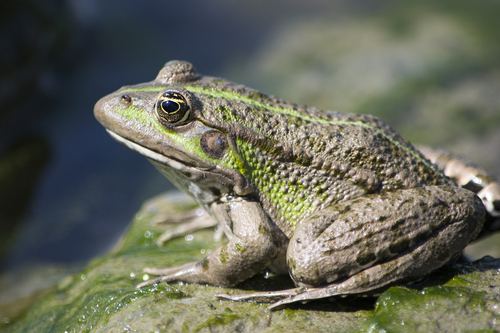
Marsh Frog
Pelophylax ridibundus
The Marsh Frog is the undisputed heavyweight of the European pond world. Known for its boisterous 'laughing' call and its habit of basking in the summer sun, this vibrant green amphibian is a favorite for backyard observers with a passion for wetlands.
Quick Identification
Size
6-12 cm (2.4-4.7 in) on average, with large females reaching up to 17 cm (6.7 in); weighs 30-150g (1-5.3 oz).
Colors
Variable olive-green to dark brown with irregular black spots; typically features a bright green or yellow stripe running down the spine. Males have greyish vocal sacs.
Key Features
- Largest frog native to Europe
- Two external vocal sacs at the corners of the mouth in males
- Distinct light-colored vertebral stripe
- Webbing on hind feet reaches the tips of the toes
When You’ll See Them
Geographic range
Where Does the Marsh Frog Live?
The Marsh Frog is native to a broad expanse of Europe and Western Asia, with a core range stretching from northern France through Central Europe to the Caspian Sea and Iran. While naturally absent from the UK and parts of Southern Europe, they have been widely introduced and have established thriving populations in these regions. They are primarily lowland specialists, favoring river valleys and expansive wetland systems where water remains year-round.
Basemap © OpenStreetMap contributors
Behavior
Marsh Frogs are highly aquatic amphibians that spend the vast majority of their lives in or very close to the water. They are famous for their love of sunshine, often seen basking in large groups on floating vegetation or muddy banks. Despite their size and seemingly relaxed nature while sunning, they are incredibly skittish; at the slightest vibration or sudden movement, they will launch themselves into the water with a powerful leap.
During the breeding season, which typically runs from April to June, Marsh Frogs become exceptionally vocal. Males use their dual vocal sacs to produce a loud, rhythmic sound that resembles human laughter, earning them a reputation as one of the noisier pond residents. While they are communal in their basking habits, they can be quite territorial when it comes to prime calling spots, often engaging in small wrestling matches with rival males.
EverydayEarth exclusive
Camera Tips
To capture the best footage of a Marsh Frog, positioning is everything. Place your camera just a few inches above the water level on a stable bank or a low-profile tripod. Aim the lens toward flat rocks or floating vegetation like lily pads where the frogs are likely to bask during the day. A low angle not only provides a more intimate 'frog's-eye view' but also helps capture the stunning reflections on the water surface.
Since Marsh Frogs are cold-blooded, they are most active on warm, sunny days. Use a camera with a fast trigger speed, as these frogs can vanish underwater in a split second if they feel threatened. If your camera allows, set it to take short video clips (10-15 seconds) rather than just stills; this allows you to capture the fascinating inflation of the male's vocal sacs during their 'laughing' calls, which is one of the most unique behaviors to observe.
While you shouldn't use food bait for amphibians, you can attract them to your camera's field of view by providing the right environment. A solar-powered water bubbler or a small fountain can create subtle ripples that attract the insects they prey upon, naturally drawing the frogs into your frame. At night, a camera with 'no-glow' infrared flash is essential, as standard white light may startle them or disrupt their natural hunting behavior.
Similar Species
Species that look similar or are commonly confused with Marsh Frog.
Frequently Asked Questions
Record Marsh Frog at your habitat
Connect a camera to start building your own species record — AI identifies every visitor automatically.