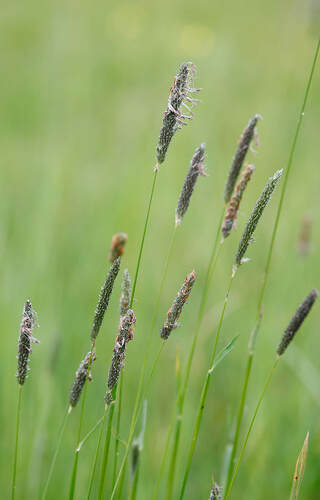
Meadow Foxtail
Alopecurus pratensis
A soft, shimmering highlight of the spring meadow, Meadow Foxtail brings texture and movement to your backyard. Its silky seed heads are a favorite perch for early-season insects and a stunning subject for golden-hour photography.
Quick Identification
Size
Stems reach 30–110 cm (12–43 in) tall; flower heads are 2–10 cm (0.8–4 in) long and 5–10 mm wide.
Colors
Bright green leaves and stems; flower heads are soft silvery-green, maturing to a golden-brown or dark greyish-purple.
Key Features
- Dense, cylindrical flower spikes that are soft to the touch
- Long, protruding hair-like awns giving a fuzzy appearance
- Stems are smooth and hairless with wide, flat leaves
- Blooms early in the spring, often before other meadow grasses
When You’ll See Them
Behavior
Meadow Foxtail is a hardy perennial grass known for its early spring awakening. Unlike many other grasses that wait for the heat of mid-summer, this species thrives in the cool, moist conditions of early spring, making it one of the first splashes of tall greenery in a backyard meadow or pasture. It spreads through short underground rhizomes, forming dense, lush tufts that provide excellent ground cover for small invertebrates.
In the backyard ecosystem, Meadow Foxtail plays a quiet but vital role. Its soft, cylindrical seed heads—the "foxtails"—are a magnet for wind-borne pollination. While it doesn't interact with humans in the way a bold mammal might, its swaying presence acts as a visual barometer for wind and weather. It is frequently visited by hoverflies and small beetles that use the sturdy stems as vantage points, and its dense foliage offers a cool microclimate for frogs and ground-nesting insects during the heat of the day.
EverydayEarth exclusive
Camera Tips
Capturing the beauty of Meadow Foxtail requires a different approach than fast-moving wildlife. To get the best results, place your camera on a low tripod or ground mount, positioning the lens at the same height as the flower heads (about 2 to 3 feet off the ground). This 'eye-level' perspective highlights the soft texture of the spikes against the background. Using a macro setting or a lens with a shallow depth of field will allow the 'foxtail' to pop, creating a beautiful bokeh effect with the rest of the meadow blurred behind it.
Timing is everything for this species. Set your camera to capture high-speed bursts or short video clips during the 'Golden Hour'—shortly after sunrise or before sunset. The low-angled light catches the fine hairs (awns) of the grass, making them glow like a halo. If your camera has a time-lapse feature, Meadow Foxtail is a perfect subject; a 4-hour window on a breezy day can create a mesmerising video of the grass dancing in the wind.
Because Meadow Foxtail attracts a variety of insects, use it as a 'natural lure.' Position your camera near a cluster of foxtails on a calm, sunny morning. You are likely to capture high-quality footage of ladybugs, hoverflies, and even early-season butterflies that use the grass for resting. Avoid using heavy baits near the grass, as the goal is to capture the natural interactions within the foliage. If the grass is too tall and blocking the view of other wildlife, don't cut it—instead, use a small stake to gently pull a few stalks to the side to create a natural window for your camera lens.
Similar Species
Species that look similar or are commonly confused with Meadow Foxtail.
Frequently Asked Questions
Record Meadow Foxtail at your habitat
Connect a camera to start building your own species record — AI identifies every visitor automatically.