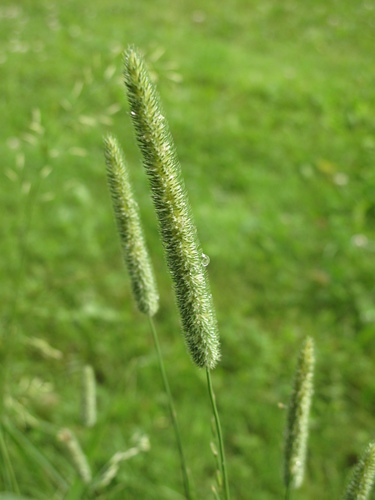
Timothy grass
Phleum pratense
A staple of the summer meadow, Timothy grass is easily recognized by its tall, cylindrical seed heads that look like tiny cattails. This hardy grass provides essential food and habitat for a wide variety of backyard birds and beneficial insects.
Quick Identification
Size
Stems reach 50–150 cm (20–60 in) tall; flower spikes are 5–15 cm (2–6 in) long.
Colors
Cool green foliage; flower heads are grayish-green, turning tan or straw-colored when dry.
Key Features
- Distinctive cylindrical, spike-like flower head
- Swollen, bulb-like base at the bottom of the stem
- Hairless, flat leaves with a prominent white ligule
- Densely packed florets that feel slightly rough to the touch
When You’ll See Them
Behavior
Timothy grass is a cool-season perennial grass that serves as a cornerstone of temperate meadow ecosystems. While it doesn't 'behave' in the animal sense, its growth cycle is highly predictable. It begins its vigorous growth in early spring, producing a dense tuft of foliage. By mid-summer, it sends up its iconic tall stalks, topped with stiff, cylindrical seed heads that sway in the wind to distribute pollen.
This species is wind-pollinated and exceptionally hardy, making it a favorite for hay production and erosion control. In a backyard setting, it acts as a structural anchor for the landscape, providing essential cover for ground-nesting insects and small mammals. It is a resilient survivor, capable of thriving in various soil types as long as they remain relatively moist and sunny.
EverydayEarth exclusive
Camera Tips
Capturing Timothy grass on camera requires a shift in perspective compared to filming animals. Rather than waiting for a visit, use the grass as a dynamic element in your framing. To get the most striking shots of the 'cat's tail' seed heads, mount your camera at a low angle, about 18 to 24 inches off the ground. This upward angle makes the grass appear majestic against the sky and is perfect for capturing the small birds, like goldfinches or sparrows, that frequently perch on the stalks to eat the seeds in late summer.
Lighting is your best friend when filming this species. Position your camera so it is facing toward the sunrise or sunset (backlighting). When the sun is low, the fine bristles (awns) of the seed head will catch the light, creating a glowing 'halo' effect. If you are using a trigger-based camera, be mindful of the wind. A stiff breeze can cause the tall stalks to sway violently, potentially triggering hundreds of empty videos. To avoid this, set your camera's sensitivity to 'medium' or use a 'Time Lapse' mode instead of a motion trigger to document the grass swaying gracefully over several hours.
For those interested in macro-wildlife, Timothy grass is a hub of activity. If your camera has a close-focus lens, aim it at the base of the grass clumps in the early morning. You are likely to capture dew-covered spider webs or various species of beetles and caterpillars that use the leaves for transit. The broad leaves of Timothy grass also make excellent 'landing pads' for butterflies; if you have a patch near a water source, aim your camera there to catch them basking in the sun between flights.
Similar Species
Species that look similar or are commonly confused with Timothy grass.
Frequently Asked Questions
Record Timothy grass at your habitat
Connect a camera to start building your own species record — AI identifies every visitor automatically.