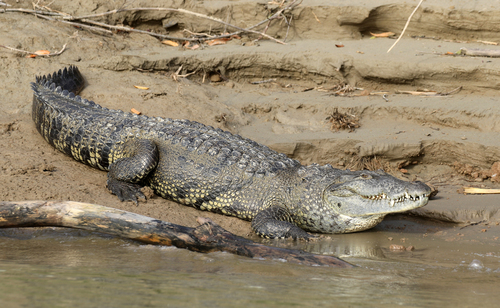
Morelet's Crocodile
Crocodylus moreletii
Meet the 'Mexican Crocodile,' a broad-snouted master of the Central American wetlands. Known for its shy nature and distinctive dark bands, this resilient reptile is a favorite for backyard observers in the tropical lowlands.
Quick Identification
Size
Typically 2.2 to 3 metres (7.2 to 10 ft) in length; weighs 35 to 58 kg (77 to 128 lbs), though large males can occasionally exceed these averages.
Colors
Dull grayish-brown or olive-green upper body with distinctive dark spots and cross-bands; the belly is a much lighter creamy-white or yellowish-tan.
Key Features
- Broad, blunt snout resembling an alligator
- Dark cross-banding on the tail and body
- Upward-facing eyes and nostrils
- Heavy, armored scales along the back
When You’ll See Them
Geographic range
Where Does the Morelet's Crocodile Live?
The Morelet's Crocodile is a specialist of the Atlantic lowlands of Central America. This species is natively found throughout the Gulf of Mexico and Caribbean drainage systems, spanning across eastern Mexico, the entirety of Belize, and northern Guatemala. While it is primarily a freshwater species, it is occasionally spotted in brackish coastal lagoons, though it lacks the high salt tolerance of the American Crocodile.
Basemap © OpenStreetMap contributors
Behavior
These crocodiles are most active under the cover of darkness. They are skilled ambush hunters, utilizing their incredible patience to wait for prey to approach the water's edge. Socially, they are somewhat solitary but can exist in high densities where food is abundant. They communicate through a series of bellows, growls, and even sub-audible vibrations in the water that can be picked up by sensitive monitoring equipment.
EverydayEarth exclusive
Camera Tips
To successfully capture a Morelet's Crocodile on camera, location is everything. Look for 'slides'—flattened, muddy paths leading from the vegetation into the water. Mount your camera about 12 to 18 inches off the ground on a sturdy tree or stake, facing these basking spots. Crocodiles are creatures of habit and will often use the exact same spot to warm up in the sun every morning between 9 AM and 11 AM.
Because these reptiles are cold-blooded, their body temperature often matches the environment, which can sometimes trick standard PIR (passive infrared) sensors. For the best results, use a camera with high-sensitivity settings or one that supports time-lapse mode during the day. At night, ensure you are using a 'No-Glow' or 'Black Flash' infrared camera, as visible red glows can occasionally spook them or attract curious juveniles who might bite the equipment.
Waterproof housing is non-negotiable. The humid, swampy environments these crocodiles call home will quickly ruin standard electronics through condensation or direct splashes. If you are setting up near a river, be mindful of rising water levels during the rainy season; place your camera slightly higher than the maximum flood line to avoid losing your gear. In the dry season, focus your efforts on the last remaining deep pools, as the population will congregate there, providing high-traffic zones for your lens.
Similar Species
Species that look similar or are commonly confused with Morelet's Crocodile.
Frequently Asked Questions
Record Morelet's Crocodile at your habitat
Connect a camera to start building your own species record — AI identifies every visitor automatically.