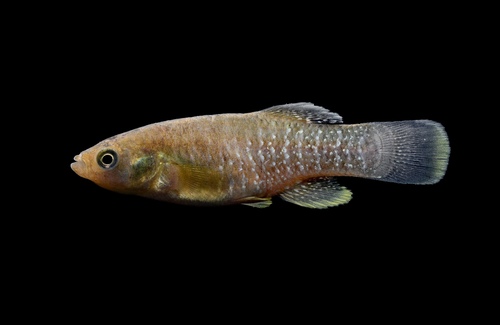
Mummichog
Fundulus heteroclitus
Meet the Mummichog, the ultimate survivor of the salt marsh. From surviving the vacuum of space to thriving in polluted estuaries, this 'mud minnow' is a master of adaptation.
Quick Identification
Size
7.5-13 cm (3-5 inches) in length; maximum up to 15 cm (6 inches)
Colors
Olive-green to muddy brown backs with silvery-yellow bellies; males develop dark vertical bars and bright yellow/orange fins during spawning
Key Features
- Rounded, paddle-like tail fin
- Stocky body with a blunt, flattened head
- Small, upward-pointing mouth
- Large, visible scales across the body
When You’ll See Them
Geographic range
Where Does the Mummichog Live?
The Mummichog is native to the Atlantic coast of North America, stretching from the cold waters of the Gulf of St. Lawrence in Canada down to the subtropical shores of northeastern Florida. They are a staple species of the Eastern Seaboard, flourishing in the complex network of estuaries and salt marshes found in states like Massachusetts, New Jersey, and South Carolina. While they are primarily found in brackish coastal waters, they can occasionally be found in freshwater tidal rivers further inland.
Basemap © OpenStreetMap contributors
Behavior
In a backyard or dock setting, you’ll notice they are opportunistic and highly active, especially as the tide rises. They follow the incoming water into the marsh grasses to forage for food. They are not particularly fearful of humans and are often the first fish to swarm around a dock if food is dropped into the water. Their social structure is loose, but they rely on their large numbers to confuse predators like egrets, herons, and larger predatory fish like Bluefish or Striped Bass.
EverydayEarth exclusive
Camera Tips
Capturing Mummichogs on camera requires an underwater setup, such as a GoPro or a specialized waterproof trail camera. The best placement is in a shallow tidal pool or a slow-moving salt marsh creek. During low tide, look for 'potholes' or depressions in the marsh that remain filled with water; these are natural traps where Mummichogs congregate in high densities. Secure your camera to a heavy brick or a specialized underwater tripod to prevent the tide from washing it away. Position the lens horizontally, about 4-6 inches from the bottom, to catch the fish as they swim through the frame.
Baiting is highly effective for these curious fish. You can attract a massive school by placing a small mesh bag filled with crushed crackers, bread, or canned cat food directly in front of the lens. If you are using a camera with a motion sensor, be aware that the movement of seagrass or suspended silt may trigger it frequently. Setting the camera to 'time-lapse' mode at 5-second intervals often yields better results than motion-detecting stills in a murky marsh environment.
Timing is everything with Mummichogs. They are most active when the tide is 'pushing' (coming in). Aim to have your camera submerged and recording about an hour before high tide. For the best visual clarity, choose a day with low wind to minimize surface ripples and stirred-up sediment. If your backyard overlooks a tidal creek, mounting a camera on a dock piling just below the low-tide line will provide a consistent view of the 'fish highway' as they travel up-creek to feed.
Similar Species
Species that look similar or are commonly confused with Mummichog.
Frequently Asked Questions
Record Mummichog at your habitat
Connect a camera to start building your own species record — AI identifies every visitor automatically.