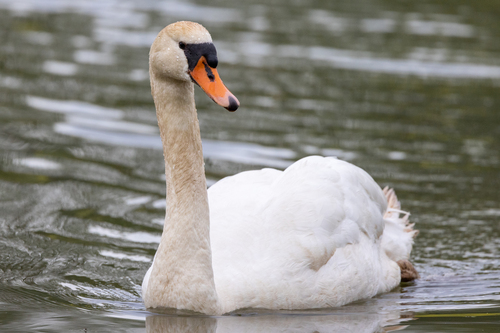
Mute Swan
Cygnus olor
The Mute Swan is a symbol of elegance and tranquility, easily recognized by its snowy plumage and graceful S-curved neck. Whether gliding across a suburban pond or defending its nest with a dramatic 'busking' display, this large waterfowl is a captivating subject for any backyard observer.
Quick Identification
Size
Length: 125-160 cm (49-63 in); Wingspan: 200-240 cm (79-94 in); Weight: 8-14.3 kg (17.6-31.5 lbs)
Colors
Pure white plumage; orange bill with a black base and fleshy knob; black legs and feet; cygnets are typically dull grey-brown.
Key Features
- Large orange bill with a prominent black basal knob
- S-shaped neck posture while swimming
- Pure white plumage and a long, pointed tail
- Rhythmic 'whirring' or 'throbbing' sound produced by wings in flight
When You’ll See Them
Geographic range
Where Does the Mute Swan Live?
The Mute Swan is originally native to a broad swathe of Europe and Central Asia, stretching from the British Isles and Scandinavia across to southern Russia and northern China. These elegant birds have been introduced to many other parts of the world, establishing massive, self-sustaining populations in the United States and Canada, particularly around the Great Lakes and the Atlantic coast. You can also find smaller, established groups in parts of South Africa, Australia, and New Zealand where they were historically introduced as ornamental park birds.
Basemap © OpenStreetMap contributors
Behavior
Mute Swans are famous for their grace and territorial nature. While they are less vocal than their 'Whooper' or 'Trumpeter' cousins, they are far from silent; they communicate through a series of hisses, snorts, and soft grunts, especially when defending their nests or young. They are often seen in mated pairs that stay together for life, displaying a high degree of social bonding and parental care.
When threatened or defending territory, the Mute Swan performs a behavior known as 'busking.' This involves arching its wings over its back and pulling its neck far back to look more imposing. In suburban areas, they can become quite accustomed to human presence, often approaching people for food, though they can become aggressive during the spring nesting season if they feel their cygnets are in danger.
EverydayEarth exclusive
Camera Tips
Capturing the perfect shot of a Mute Swan requires careful consideration of their bright white feathers, which can easily 'blow out' and lose detail in direct sunlight. Set your camera at a low angle, ideally at the water's edge, to create an intimate perspective that highlights their reflection on the surface. To maintain texture in their plumage, it is best to use a slight negative exposure compensation (-0.7 to -1.0) and aim for the 'golden hour'—the soft light of early morning or late afternoon.
For backyard or pond-side trail cameras, placement is key. Position your camera about 12 to 18 inches off the ground on a stable post or tree facing a known entry or exit point from the water. Swans are large birds, so ensure the camera is stepped back at least 10 to 15 feet to keep the entire bird in the frame. Since they move slowly while swimming but can be quick to take off, a camera with a fast trigger speed and a multi-shot burst mode is ideal for capturing the spray of water as they run across the surface to gain flight.
While you shouldn't use artificial lures or processed bread (which is harmful to them), providing a shallow, clean edge to a pond with native aquatic plants can naturally attract them to a specific spot. In winter, if the water is partially frozen, swans will congregate near any remaining open patches. This is a prime time for camera placement, as their movements are more predictable. Monitor their paths carefully; they are creatures of habit and will often use the same grassy banks to exit the water for preening or resting.
Similar Species
Species that look similar or are commonly confused with Mute Swan.
Trumpeter Swan
Larger with an all-black bill and a straight neck posture, unlike the Mute Swan's orange bill and S-curve neck.
Tundra Swan
Smaller than the Mute Swan with a black bill that usually features a small yellow spot near the eye.
Whooper Swan
Features a large yellow patch on its black bill and lacks the black basal knob found on Mute Swans.
Frequently Asked Questions
Record Mute Swan at your habitat
Connect a camera to start building your own species record — AI identifies every visitor automatically.