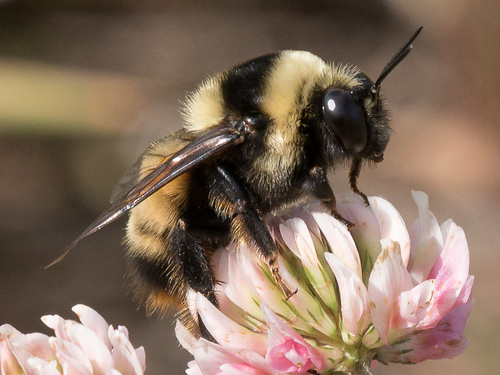
Nevada Bumble Bee
Bombus nevadensis
Meet the golden giant of the West. The Nevada Bumble Bee is a robust, hardworking pollinator that brings a flash of brilliant yellow and a soothing hum to North American meadows and backyards.
Quick Identification
Size
Large-bodied; Queens are 18–22 mm (0.7–0.9 in) long; workers and males are 13–17 mm (0.5–0.7 in) long.
Colors
Bright golden-yellow hair on the thorax and first three segments of the abdomen; tail tip and face are typically black, though males have yellow hair on the face.
Key Features
- Distinctive golden-yellow 'saddle' covering the first three abdominal segments
- Large, robust body with a relatively short tongue compared to other large bumble bees
- Males possess exceptionally large eyes that take up much of the head area
When You’ll See Them
Behavior
These bees are highly effective 'buzz pollinators.' They grab onto a flower and vibrate their flight muscles at a specific frequency, which dislodges pollen that other insects cannot reach. This makes them vital for the reproduction of many native wildflowers and garden vegetables like tomatoes and peppers.
In the late summer, the colony produces new queens and males (drones). You may see males perching on tall vegetation or hovering in specific areas, waiting for a queen to fly by. Unlike honeybees, bumble bee colonies are annual and die off in the autumn, leaving only the newly mated queens to survive the winter and start the cycle anew.
EverydayEarth exclusive
Camera Tips
Lighting is your best friend when filming insects. The Nevada Bumble Bee's golden hairs look spectacular in the 'golden hour' of early morning or late afternoon. Try to angle your camera so the sun is hitting the bee from the side; this highlights the texture of its fuzz and the translucency of its wings. Avoid filming directly into the sun, as the bee will appear as a dark silhouette, losing all its beautiful yellow markings.
If you are using an AI-powered trail camera, place it near a water source or a shallow 'bee bath' (a dish with pebbles and water). In hot weather, bees frequently visit these spots to hydrate. Set your camera’s PIR (motion) sensitivity to its highest level, as insects have low body heat and small profiles, making them harder for standard sensors to detect compared to mammals. Check your footage weekly during the peak of summer to see the shift from large queens to the smaller, more numerous workers.
Similar Species
Species that look similar or are commonly confused with Nevada Bumble Bee.
Frequently Asked Questions
Record Nevada Bumble Bee at your habitat
Connect a camera to start building your own species record — AI identifies every visitor automatically.