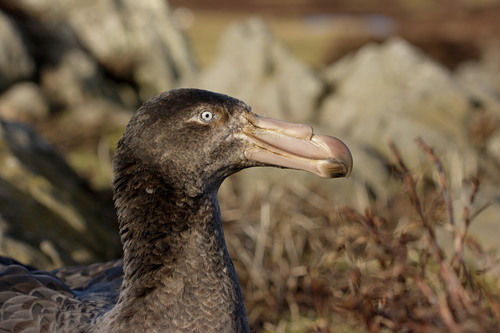
Northern Giant Petrel
Macronectes halli
The formidable 'vulture of the sea,' the Northern Giant Petrel is a master of the southern winds and a powerful presence on sub-antarctic shores. With a massive wingspan and a razor-sharp bill, this opportunistic scavenger is one of the most striking sights in the coastal wild.
Quick Identification
Size
Length: 80–95 cm (31–37 in); Wingspan: 150–210 cm (59–83 in); Weight: 3–5 kg (6.6–11 lb)
Colors
Mottled grey-brown body with a noticeably paler face and throat; bill is pale horn color with a distinct reddish-pink or orange-brown tip.
Key Features
- Reddish-pink or brownish-orange tip on the bill (unguis)
- Mottled grey-brown plumage with a pale face
- Large, prominent tube-shaped nostrils on top of the bill
- Massive, powerful build with a wingspan reaching up to 7 feet
When You’ll See Them
Behavior
The Northern Giant Petrel is a formidable and opportunistic predator, often referred to as the 'vulture of the sea.' Unlike many other petrels that feed primarily at sea, these birds are equally comfortable on land, where they scavenge for carrion or hunt smaller seabirds and seal pups. They are highly aggressive at carcass sites, often using their massive size and powerful bills to intimidate other scavengers.
In the air, they are master gliders, using the updrafts from ocean waves to travel thousands of miles with minimal effort. While they are generally solitary at sea, they congregate in large, rowdy groups around food sources. To humans, they are often seen as curious but wary, sometimes following fishing vessels for discarded scraps, though they generally maintain a safe distance unless food is involved.
EverydayEarth exclusive
Camera Tips
Capturing a Northern Giant Petrel on a trail camera requires a coastal strategy. For those lucky enough to live on rugged southern coastlines or near breeding colonies, place your camera on a sturdy tripod or weighted mount along cliff edges or rocky shorelines where birds are likely to land. Because these birds are heavy and take off into the wind, identify the prevailing wind direction and position your camera to catch them face-on as they approach the ground.
The 'secret sauce' for getting high-quality close-ups of this species is scent and bait, though you must always check local wildlife regulations first. If legal, fish scraps or a puncture-sealed container of fish oil can lure them into the camera's field of view. Be warned: they are messy eaters and may splash or vomit a foul-smelling stomach oil if they feel threatened or over-excited, so a protective waterproof housing for your camera is essential to prevent damage from salt spray and biological oils.
Set your camera to a fast shutter speed or high-frame-rate video mode. These birds move their heads with quick, jerky motions when scavenging, and their massive wings can create a blur even in moderate light. To capture the best detail of their mottled feathers and distinctively tipped bill, aim for the 'golden hours' of early morning or late afternoon when the low sun angle highlights the texture of their plumage.
Because Northern Giant Petrels are large and bold, they may actually investigate the camera itself. Ensure your gear is securely anchored to prevent it from being knocked over by a curious bird. Use a wide-angle lens if you are placing the camera near a known roosting spot to capture the full scale of their impressive wingspan as they land or interact with other birds.
Similar Species
Species that look similar or are commonly confused with Northern Giant Petrel.
Frequently Asked Questions
Record Northern Giant Petrel at your habitat
Connect a camera to start building your own species record — AI identifies every visitor automatically.