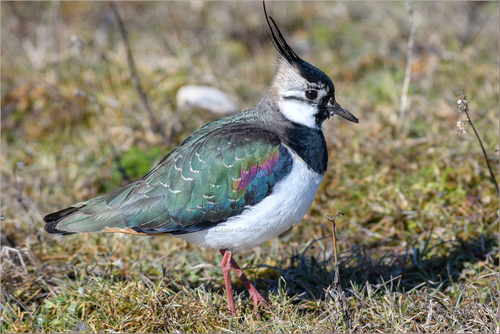
Northern Lapwing
Vanellus vanellus
With its elegant wispy crest and shimmering emerald wings, the Northern Lapwing is a master of the meadows. Known for its acrobatic 'tumbling' flight and iconic call, it is one of the most charismatic visitors to open landscapes.
Quick Identification
Size
Length: 28-31 cm (11-12 in); Wingspan: 82-87 cm (32-34 in); Weight: 128-330 g (4.5-11.6 oz)
Colors
Iridescent dark green upperparts that can appear purple or bronze; stark white underparts; black breast band and face; distinctive long black crest; orange-brown feathers under the tail.
Key Features
- Long, thin black crest on the head
- Broad, rounded 'paddle-shaped' wings
- Iridescent green-black plumage with a white belly
- Characteristic 'peewit' call and erratic tumbling flight
When You’ll See Them
Behavior
The Northern Lapwing is famous for its acrobatic aerial displays and its haunting, two-note 'pee-wit' call, which gives the bird its common folk name. During the spring breeding season, males perform spectacular 'tumbling' flights, diving and rolling through the air with heavy, rhythmic wingbeats to attract mates and defend their territory. On the ground, they exhibit the classic plover foraging style: a quick run, a sudden halt to scan for movement, and a precise peck at the soil.
Highly social outside of the nesting period, Northern Lapwings often congregate in massive flocks during the winter, sometimes numbering in the thousands. They are ground-nesters, relying on camouflage to protect their eggs. If a potential predator—or a curious human—gets too close to a nest, the adults are remarkably brave, frequently 'dive-bombing' the intruder or performing a 'broken-wing' distraction display to lure the threat away from their young.
EverydayEarth exclusive
Camera Tips
Capturing the Northern Lapwing on a backyard or trail camera requires a ground-level strategy. Because these birds are almost exclusively terrestrial when not in flight, you must position your camera very low—ideally between 6 and 10 inches off the ground. Aim your lens at open patches of short grass or the muddy margins of a garden pond. If you have a large property, look for recently tilled soil or 'scrapes' in the earth, which lapwings often use as nesting sites or foraging grounds.
These birds are incredibly fast and can be skittish, so set your camera to its highest trigger speed and use 'Burst Mode' or 'Photo+Video' mode. A 3-shot burst is ideal for capturing the moment they raise their iconic head crest or perform their unique 'foot-trembling' dance to lure out worms. Because their feathers are highly iridescent, the morning sun (6-9 AM) provides the best lighting to reveal the shimmering greens and purples in their plumage; avoid placing the camera facing directly into the sun to prevent silhouetting.
If you are trying to attract them to a specific spot, they are drawn to damp ground. If your camera is near a birdbath, consider a ground-level saucer or a small solar-powered dripper; the sound and sight of moving water on flat ground are major draws. During the winter months, they may be lured by mealworms placed on a flat, open tray. Ensure your camera is well-camouflaged with local grasses, as their keen eyes are evolved to spot any unusual vertical shapes in their flat, horizontal world.
Similar Species
Species that look similar or are commonly confused with Northern Lapwing.
Frequently Asked Questions
Record Northern Lapwing at your habitat
Connect a camera to start building your own species record — AI identifies every visitor automatically.