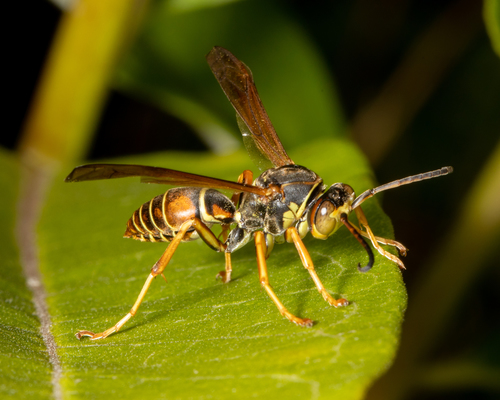
Northern Paper Wasp
Polistes fuscatus
Meet the garden’s most misunderstood architect. The Northern Paper Wasp is a master of facial recognition and a natural guardian that protects your plants from hungry caterpillars.
Quick Identification
Size
15-21 mm (0.6-0.8 inches) in length; wingspan of approximately 30-45 mm (1.2-1.8 inches)
Colors
Deep mahogany brown to black body with variable yellow or reddish-brown markings; wings are typically smoky-black or dark brown
Key Features
- Slender 'wasp-waist' petiole
- Long legs that dangle below the body during flight
- Wings folded longitudinally along the back when at rest
- Distinctive umbrella-shaped open-comb nest
When You’ll See Them
Behavior
Northern Paper Wasps are highly social insects that live in colonies founded by one or more 'foundress' queens. Unlike the aggressive reputation of yellowjackets, these wasps are generally docile and rarely sting unless their nest is directly disturbed. They are remarkably intelligent for insects; research has shown that they can recognize the individual faces of other members of their colony, which helps maintain a complex social hierarchy without constant fighting.
In the backyard ecosystem, they act as both pollinators and natural pest controllers. While the adults feed on nectar for energy, they are active hunters that seek out caterpillars, beetle larvae, and flies to bring back to the nest as protein for their growing larvae. In late summer, you may see them congregating around water sources or ripe fruit as they prepare for the end of the colony cycle.
EverydayEarth exclusive
Camera Tips
Capturing the Northern Paper Wasp requires focusing on their 'hubs' of activity rather than trying to catch them in random flight. Because these insects are relatively small, standard trail cameras may struggle to trigger based on motion alone. For the best results, position your AI-powered camera within 12 to 24 inches of a known nest site, typically found under the eaves of a shed, a porch rail, or a fence line. Ensure the camera is angled slightly from the side to capture the profile of the wasps as they land on the face of the umbrella-shaped nest.
If you don't have a nest nearby, set up a 'landing strip' to attract them. A shallow dish of water with pebbles for them to land on (to prevent drowning) is an excellent lure during the heat of summer. Alternatively, a fermented fruit bait or a simple sugar-water feeder can provide the high-energy snacks they crave. Place these lures in a sunny, wind-protected area where the wasps feel safe landing. Setting your camera to 'Video' or 'Burst' mode is essential, as their movements are lightning-fast.
Lighting is your best friend when photographing dark-bodied insects like the Northern Paper Wasp. Try to position your camera so the sun is at a 45-degree angle to the subject; this 'side-lighting' will highlight the iridescence of their smoky wings and the subtle textures of their mahogany bodies. Avoid direct, harsh midday sun from behind the camera, which can wash out the delicate yellow markings on their faces. If your camera allows for focal adjustments, use a macro setting or a close-up lens to bring their incredible facial features into view.
Finally, remember that while Northern Paper Wasps are generally non-aggressive, they are protective of their homes. Always use a mounting bracket that allows you to adjust the camera without putting your hands directly next to the nest. If you notice the wasps 'flagging' (vibrating their wings or walking toward you in a jerky motion), back away and give them space. Late spring is the best time to set up your gear, as the queens are just beginning to build their colonies and are less defensive than they will be in the peak of summer.
Similar Species
Species that look similar or are commonly confused with Northern Paper Wasp.
Frequently Asked Questions
Record Northern Paper Wasp at your habitat
Connect a camera to start building your own species record — AI identifies every visitor automatically.