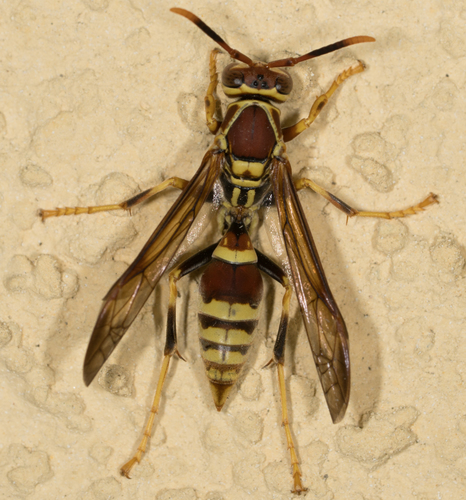
Guinea Paper Wasp
Polistes exclamans
A master architect of the insect world, the Guinea Paper Wasp is a vibrant, beneficial gardener that provides natural pest control and fascinating social displays.
Quick Identification
Size
12-16 mm (0.5 to 0.6 inches) in length
Colors
Rich reddish-brown base with vivid yellow bands on the abdomen and thorax; yellow-tipped antennae and yellow facial markings
Key Features
- Slender 'wasp-waist' petiole connecting thorax and abdomen
- Distinctive yellow and brown/red banding on the abdomen
- Yellow V-shaped markings on the upper thorax
- Open-faced, umbrella-shaped paper nests
When You’ll See Them
Behavior
The Guinea Paper Wasp is a social insect known for its impressive architectural skills, building the iconic "umbrella nests" often found tucked under the eaves of houses or inside dense shrubbery. Unlike more aggressive social wasps like yellowjackets, these wasps are generally docile and will usually only sting if their nest is directly disturbed. They operate under a fascinating social hierarchy determined by age; the older a wasp is, the higher its rank within the colony's social structure.
In the backyard, these wasps are highly beneficial allies for gardeners. They spend their daylight hours patrolling plants for caterpillars and other soft-bodied insects to feed their larvae, acting as a natural and efficient form of pest control. While a single queen typically dominates the egg-laying, the workers are physiologically very similar, leading to complex social dynamics within the small, open-combed colonies.
EverydayEarth exclusive
Camera Tips
Capturing high-quality footage of the Guinea Paper Wasp requires focusing on two primary areas: their nesting sites and their hydration stations. Because these wasps are most active during the warmest parts of the day, ensure your camera is positioned to utilize bright, direct sunlight, which highlights the iridescent sheen of their wings and the vivid yellow of their markings. If you find a nest under an eave or railing, mount your camera approximately 12 to 24 inches away using a macro lens or a camera with a dedicated close-up mode. This allows you to capture the intricate 'fanning' behavior they use to cool the nest on hot days.
To draw them into a specific frame away from the nest, set up a 'wasp bar.' This is a shallow dish filled with pebbles and just enough water to keep the tops of the stones dry. Guinea Paper Wasps frequently visit these to drink and collect water for nest cooling. Position your camera at a low 45-degree angle relative to the water source to capture their profile and dangling legs as they land. High-speed video settings (60fps or higher) are highly recommended, as their flight movements are incredibly rapid and can appear blurry on standard settings.
Seasonal timing is critical for camera placement. In early spring, you can capture 'foundress' queens beginning the nest alone. By mid-summer, the colony will be at its peak activity. During this time, look for 'satellite' nests nearby, as P. exclamans is known for having multiple queens start related colonies in close proximity. If using an AI-powered camera, set the motion sensitivity to its highest threshold, as the small size of a single wasp may not always trigger sensors designed for larger mammals or birds.
Similar Species
Species that look similar or are commonly confused with Guinea Paper Wasp.
European Paper Wasp
Has more black on the abdomen and lacks the reddish-brown tones of the Guinea Paper Wasp; its antennae are entirely orange.
Northern Paper Wasp
Usually darker overall with more brown and less vibrant yellow banding; it lacks the specific yellow V-pattern on the thorax.
Southern Yellowjacket
Much stockier build with a thicker waist and shorter legs; they build large, enclosed paper nests often hidden in cavities or underground.
Frequently Asked Questions
Record Guinea Paper Wasp at your habitat
Connect a camera to start building your own species record — AI identifies every visitor automatically.