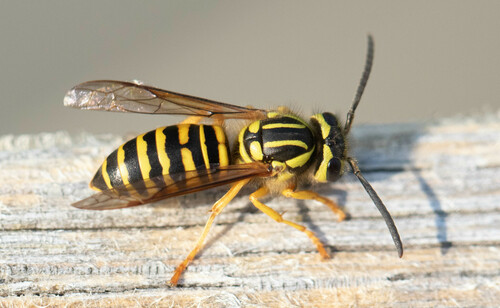
Southern Yellowjacket
Vespula squamosa
The Southern Yellowjacket is a vibrant and highly social wasp famous for its unique orange queens and sprawling underground colonies. A master of both hunting and scavenging, it is a fascinating, if sometimes misunderstood, fixture of North American backyards.
Quick Identification
Size
Workers: 10–13 mm (0.4–0.5 in); Queens: up to 20 mm (0.8 in)
Colors
Workers are black and yellow; Queens are distinctively bright orange or amber with black markings
Key Features
- Two longitudinal yellow stripes on the scutum (middle of the back)
- Large, striking orange queen significantly bigger than workers
- Clear wings with dark veins
- Abdomen with alternating black and yellow bands
When You’ll See Them
Behavior
Southern Yellowjackets are highly social insects known for their complex colony structures and impressive foraging range. Unlike many of their relatives, the queens of this species are famously orange and often begin their life cycle as social parasites. They will frequently invade the established nests of other yellowjacket species, such as the Eastern Yellowjacket, killing the resident queen and forcing the existing workers to raise her orange-hued offspring.
These wasps are incredibly industrious and can build enormous nests, which are typically found underground but may occasionally occupy wall voids or dense brush. In the southern parts of their range where winters are mild, colonies can become perennial, surviving for multiple years and growing to massive sizes with dozens of queens and thousands of workers. While they are protective of their nests and can be aggressive if disturbed, they are also beneficial predators that help control garden pest populations.
EverydayEarth exclusive
Camera Tips
To capture high-quality footage of Southern Yellowjackets, you need to focus on their foraging hubs. Setting up a camera near a dedicated 'bait station' is far more effective and safer than trying to film at the nest entrance. During the spring and early summer, use protein-rich baits like canned tuna or small scraps of deli meat to attract workers looking to feed the colony's larvae. As the season shifts into autumn, switch to sweet lures such as overripe peaches, melons, or a sponge soaked in sugar water, as the adult wasps shift their focus to energy-rich carbohydrates.
For the best visual results, use a camera with a macro lens or a close-focusing trail camera positioned approximately 12 to 18 inches from your bait. Because these wasps move with rapid, erratic motions, a high frame rate (60fps or higher) is essential for capturing the detail of their wing beats and mandible movements. If your camera allows for manual focus, lock it onto the center of the bait to ensure the insect stays sharp when it lands. Bright, indirect sunlight is the ideal lighting condition, as it avoids harsh shadows while making the vibrant yellow and orange pigments 'pop' against the background.
Safety and ethics are paramount when filming these insects. Never place your camera or yourself directly in the flight path of a nest, as this can trigger a defensive swarm. If you are trying to capture the unique orange queen, look for her in early spring when she is first emerging to find a host nest, or in late autumn when new queens depart to find overwintering sites. A tripod-mounted camera with a remote trigger or PIR (passive infrared) sensor can help you get close-up shots without needing to be physically present, reducing the risk of stings.
Similar Species
Species that look similar or are commonly confused with Southern Yellowjacket.
Eastern Yellowjacket
Lacks the two yellow stripes on the thorax; the queen is yellow and black rather than bright orange.
German Yellowjacket
Has three black dots on the face and a different pattern of black spots and triangles on the abdomen.
European Paper Wasp
Much thinner body with longer, dangling legs during flight and small, open-cell nests.
Frequently Asked Questions
Record Southern Yellowjacket at your habitat
Connect a camera to start building your own species record — AI identifies every visitor automatically.